CONTACT PHONE 816-380-4747
OPEN HOURS

Mon - Fri 8:00AM - 5:00PM Central

ADDRESS

1150 SE Hamblen Rd, Lee's Summit, MO 64081

2026 Top Types of Banner Stands for Global Buyers

In 2026, Banner Stands remain practical tools for trade shows, retail launches, conferences, and mobile demonstrations. Global buyers now expect more than attractive graphics. They need reliable frames, fast assembly, compact packaging, and clear performance information. A stand may look impressive online, yet feel unstable on a crowded exhibition floor. That gap deserves attention.

Exhibition consultant Andy Saks once said, “Your booth is your silent salesperson.” His observation explains why buyers should compare retractable, tension fabric, modular, outdoor, tabletop, and double-sided Banner Stands carefully. Each type serves a different selling environment. A lightweight roller stand suits frequent travel. A modular system offers stronger branding flexibility. An outdoor model needs weighted bases, weather-resistant printing, and safer anchoring.

Small details matter.

From practical sourcing experience, buyers should inspect aluminum thickness, graphic replacement methods, carry-case strength, and warranty terms. They should also confirm fire-safety documentation and venue requirements before ordering. Regional standards can differ. So can shipping costs, electrical rules, and installation expectations. Sustainable materials may reduce waste, but they can increase initial costs. That trade-off needs honest evaluation.

No buying guide is perfect. Product quality changes between suppliers, and online photographs can hide weak connectors or poor stitching. This 2026 overview therefore focuses on usable evidence, not fashionable claims. It compares Banner Stands by portability, durability, visual impact, maintenance, and total ownership cost. The best choice is rarely the largest one. It is the stand that performs reliably when deadlines are tight, floors are uneven, and attention is difficult to win.
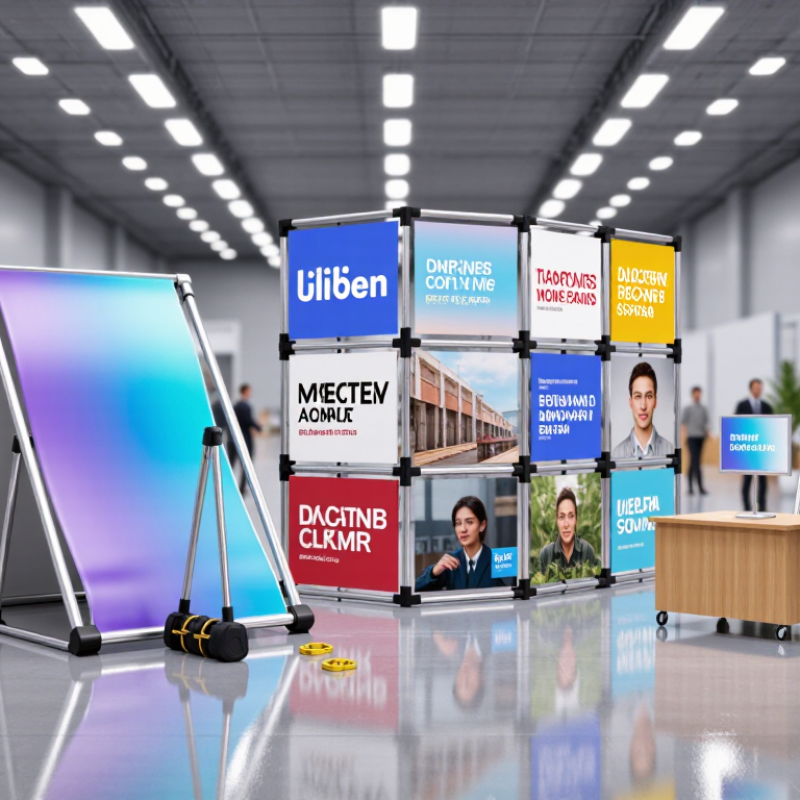
2026 Top Types of Banner Stands for Global Buyers

What Are Banner Stands and Why Do Global Buyers Use Them?

Banner stands are portable display structures that keep printed graphics upright in stores, exhibitions, airports, and outdoor events. A typical unit has a weighted base, support pole, and replaceable graphic panel. Retractable stands roll the graphic into their base for quick setup. Tension-fabric stands stretch printed fabric across a lightweight frame. Telescopic systems adjust their height and width for changing messages. Each design serves a different working condition. A retailer may need a narrow stand beside a checkout counter. An exhibitor may need a wider backdrop for a busy booth.

Global buyers use banner stands because they reduce setup time, transport costs, and storage pressure. One person can often assemble a retractable stand within minutes. That matters when shipments arrive late or exhibition schedules change. Buyers should check packed dimensions, graphic material, base stability, and replacement-part availability. Print color can also vary between suppliers, especially across different production regions. Requesting a physical proof is wiser than trusting a screen image. I have seen attractive graphics fail because glare made small text unreadable. That lesson is easy to overlook. Buyers should also confirm venue height limits, indoor fire-safety requirements, and local advertising rules before ordering. A low-cost stand is not always economical if its frame bends after repeated use. Reliable specifications, clear warranty terms, and tested packaging provide stronger purchasing confidence.

Main Types of Banner Stands Available in 2026

2026 Top Types of Banner Stands for Global Buyers

Main Types of Banner Stands Available in 2026

Retractable banner stands remain practical for trade shows, retail entrances, and hotel events. Their graphic rolls into a compact aluminum cassette. This protects the print during transport. X-banner and L-banner stands offer lower-cost display options. They use lightweight frames and replaceable corner fittings. These formats suit short campaigns, but they can feel less stable in crowded aisles.

Tension fabric stands create a cleaner, more architectural appearance. Silicone-edged fabric fits into an aluminum frame, producing a nearly seamless face. They work well for modular booths and repeated brand environments. Outdoor telescopic stands provide greater height and wind flexibility. However, buyers should check base weight, locking points, and fabric tension before ordering. A tall display is not automatically a safer display.

Market data supports continued investment in visual communication. Grand View Research valued the global digital signage market at about US$27.1 billion in 2023 and forecasts an 8.1% CAGR through 2030. This figure does not measure banner stands directly. It does show stronger demand for flexible visual displays. Smithers’ Future of Global Printing to 2029 also identifies continued value in short-run, customized graphics. In practice, material choice matters as much as appearance. Polyester fabric may reduce glare, while PVC film can provide sharper saturated color. I still see buyers choosing purely by price. That often creates weak bases, difficult assembly, and avoidable replacement costs.

How to Compare Banner Stand Features and Display Performance

Comparing banner stands starts with the display environment, not the printed graphic. A lightweight retractable stand may suit a hotel lobby, trade booth, or retail entrance. Outdoor events require a wider base, stronger connectors, and resistance to uneven ground. I check the stand on a flat floor and a carpeted surface. Small movements can reveal weak feet or loose joints.

Graphic tension directly affects display performance. The image should remain smooth when the banner is fully extended. Wavy edges often indicate poor material control or an uneven roller. Ask about banner thickness, opacity, curl resistance, and replacement methods. A matte surface can reduce glare under exhibition lighting. Color consistency matters more when several stands appear together. It is easy to overlook this.

Setup time also deserves a practical test. Can one person assemble it without tools or unclear instructions? The support pole should lock firmly, while the base should transport without sharp edges. Check the packed dimensions against airline cases, storage shelves, and delivery cartons. A heavier base may improve stability, but it can increase handling costs. I have seen buyers choose the lightest option, then struggle with frequent movement. That decision needs honest review. Ask for load details, material specifications, care guidance, and relevant safety documentation for the intended market. Performance claims should be tested, not simply repeated.

2026 Top Types of Banner Stands for Global Buyers

This comparative index evaluates common banner stand formats on a 1–5 scale. Higher scores indicate stronger performance for the selected feature. The assessment reflects typical construction, setup method, portability, and use conditions across the global display market; it does not represent any specific company or brand.

Retractable stands are generally the fastest to deploy and easiest to transport. Tension fabric and pop-up systems usually provide stronger visual impact for larger backwalls, while outdoor flag and X-banner formats are valued for portability and flexible placement. Actual performance depends on size, material, base design, print quality, and wind conditions.

Which Banner Stand Fits Different Events, Spaces, and Budgets?

2026 Top Types of Banner Stands for Global Buyers

The right banner stand depends on the event, floor space, and spending limit. For compact booths, retractable stands offer fast setup, neat graphics, and easy transport. They suit seminars, hotel displays, and crowded retail entrances. A single-sided model usually costs less, while a double-sided unit improves visibility in open aisles.

For larger exhibitions, fabric tension walls create a stronger backdrop and support wider branding. Modular systems fit changing booth sizes, but they require more planning and careful storage. CEIR reports that 81% of exhibition attendees hold buying influence, while 92% seek new products or services. Clear messaging matters when visitors have only seconds to notice a display. Keep the headline readable from several meters away.

Budget buyers may choose economy roll-up stands for short campaigns. Premium buyers should assess frame durability, print replacement, lighting, and shipping dimensions. The cheapest stand is not always economical. Too small is costly. A heavy display can also become a handling problem at international events. I have seen teams prioritize appearance and overlook setup time. That mistake affects staff energy and visitor engagement. According to UFI’s Global Exhibition Barometer, exhibition activity continues to vary by region, so buyers should avoid assuming one format works everywhere. Test the stand in its actual space, including uneven floors, bright windows, and crowded walkways.

2026 Top Types of Banner Stands for Global Buyers - Which Banner Stand Fits Different Events, Spaces, and Budgets?

Banner Stand Type Typical Display Size Best-Suited Events Recommended Space Portability Typical Reusability Indicative Budget per Unit (USD) Best Buyer Profile
Retractable Roll-Up Banner Stand 24–36 in W × 78–96 in H Trade shows, conferences, retail promotions, reception areas Small to medium indoor spaces High; usually includes a carry bag Graphics can often be replaced; hardware is reusable $50–$250 Buyers needing a fast setup and compact transport
Standard X-Frame Banner Stand 24–32 in W × 63–79 in H Indoor sales events, community programs, temporary promotions Narrow indoor areas and shop floors High; lightweight and easy to disassemble Graphics are generally replaceable $20–$90 Budget-conscious buyers requiring multiple units
L-Frame Banner Stand 24–33 in W × 63–79 in H Presentations, exhibitions, product information points Indoor spaces with a stable, flat floor High Graphics can usually be changed for new campaigns $25–$100 Organizations seeking a simple, economical display
Telescopic Tension Banner Stand 24–48 in W × 60–96 in H Pop-up shops, media walls, indoor brand activations Indoor areas requiring adjustable height or width Medium to high Fabric or graphic skins may be replaced $100–$350 Buyers needing flexible sizing for different venues
Fabric Pop-Up Display 60–120 in W × 60–96 in H Trade show backdrops, conferences, photo areas, press events Medium to large indoor booth spaces Medium; folds into a transport bag or case Fabric graphic is washable in accordance with care instructions $180–$700 Exhibitors wanting broad graphic coverage and wrinkle-resistant fabric
Straight Tension Fabric Wall 60–240 in W × 89–96 in H Large exhibitions, step-and-repeat walls, corporate presentations Medium to large indoor areas Medium; larger systems may require a wheeled case Frame is reusable and fabric graphics are replaceable $300–$1,200 Professional exhibitors requiring a seamless, premium backdrop
Outdoor Telescopic Banner Stand 24–48 in W × 79–120 in H Outdoor festivals, sports events, roadside promotions, campuses Outdoor locations with suitable ground or weighted bases Medium Hardware is reusable; outdoor graphics may need periodic replacement $120–$500 Buyers needing adjustable outdoor visibility and added stability
Water-Base Outdoor Banner Stand 24–36 in W × 79–96 in H Street marketing, outdoor entrances, fairs, public venues Hard outdoor surfaces where a refillable base is practical Low to medium when filled; easier when empty Graphics and base can be reused with proper maintenance $100–$400 Event teams prioritizing movable outdoor stability
Double-Sided Banner Stand 24–48 in W × 79–96 in H per face Aisles, entrances, retail corridors, two-way traffic areas Locations viewed from opposite directions Medium Frame is reusable; both graphics are replaceable on many models $150–$600 Buyers seeking two-direction messaging from one footprint
Hanging Banner Stand 36–120 in W × 36–120 in H Exhibition halls, retail ceilings, atriums, large indoor venues Large spaces with approved overhead suspension points Low to medium; installation equipment may be required Frame and fabric can be reused for recurring events $250–$1,500 Exhibitors needing high-level visibility without using floor space
Budget note: Indicative prices are broad market ranges for hardware and standard printed graphics in 2026. Actual costs vary by display size, material, printing method, quantity, shipping, taxes, packaging, and installation requirements.

Key Buying Factors for International Buyers in 2026

For global buyers in 2026, banner stand selection starts with real operating conditions, not appearance. UFI’s 2025 Global Exhibition Barometer surveyed more than 400 exhibition companies across over 60 countries. Its findings highlight continuing cost pressure, logistics uncertainty, and regional differences. A light roll-up stand suits frequent travel. A fabric tension stand offers a larger graphic area. Outdoor buyers need weighted bases, weather-resistant prints, and stronger frames.

Shipping dimensions can change the purchase decision. Measure the packed case, not only the assembled stand. Airlines and couriers charge heavily for oversized packages. Recycled aluminum may reduce weight, but buyers should verify strength and repair options. Grand View Research’s 2024 trade-show-display analysis projects continued market growth through 2030, increasing demand for portable and reusable systems. Growth does not remove quality risks. Some low-cost graphics wrinkle after one event.

International buyers should compare total landed cost, including packaging, customs handling, replacement parts, and local labor. Ask for material specifications, flame-performance documentation, print color tolerances, and assembly instructions. Regional electrical needs matter when lighting is included. Digital proofing also deserves attention; colors can shift between screens and fabric. I have seen buyers approve attractive samples, then struggle with unclear hardware compatibility. That mistake is avoidable. Still, durability claims require evidence. Request test results, warranty terms, and photos from repeated installations before placing a large order.