Mon - Fri 8:00AM - 5:00PM Central
1150 SE Hamblen Rd, Lee's Summit, MO 64081
Buying pavement concrete across borders requires more than comparing price per cubic meter. Climate, transport distance, local standards, and contractor experience can change the final result. A mix that performs well in a dry highway project may crack early in a wet, freeze-thaw region. Small details matter. Cement type, aggregate quality, water control, air content, and curing practice should be reviewed before signing a contract.
Peter C. Taylor, a respected pavement materials specialist and former director of the National Concrete Pavement Technology Center, has emphasized, “Good concrete pavement begins with good materials and good construction.” This principle sounds simple. It is not always easy to achieve globally. Buyers should verify supplier testing, batch consistency, environmental records, delivery capacity, and quality-control procedures. Independent laboratory checks can expose hidden risks, especially when specifications differ between countries. Ask for recent project evidence, not only attractive brochures.
The seven tips in this guide focus on practical purchasing decisions. They cover performance requirements, regional climate, supplier evaluation, mix design, logistics, testing, and lifecycle value. Cost still matters. However, the cheapest quotation may become expensive after repairs, traffic disruption, or premature replacement. I have seen projects focus heavily on initial price and overlook curing conditions. That decision can weaken otherwise strong pavement concrete. Buyers should also admit uncertainty. Forecasts can be wrong. Local engineers and experienced contractors remain essential for final approval. Reliable purchasing combines documented evidence, technical judgment, and careful communication across borders.

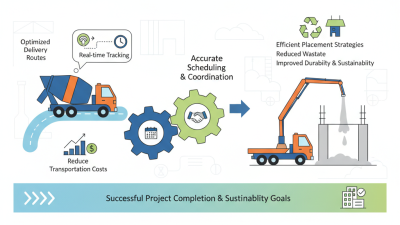
Before buying pavement concrete globally, translate the project drawings into measurable requirements. Record traffic volume, axle loads, pavement thickness, joint spacing, and expected service life. Climate matters too. Freeze-thaw exposure, heavy rainfall, salt, and extreme heat can change the mix design. Specify compressive strength, flexural strength, maximum water-cement ratio, slump, air content, aggregate size, and curing method. Local engineering standards should guide these values.
A reliable specification should include testing requirements, not only strength targets. Request recent laboratory results, aggregate grading data, cement certificates, and quality-control procedures. Confirm whether the supplier can maintain consistency during long-distance transport. A concrete mix may meet a laboratory target but lose workability before placement. That risk deserves attention. Very real.
Include delivery temperature, batch size, placement rate, and maximum discharge time in the purchasing documents. Coordinate these details with the contractor, testing laboratory, and local engineer. Field trials can reveal problems with pumping, finishing, or early cracking. I have seen projects focus heavily on compressive strength while overlooking curing conditions. That is an easy mistake. Requirements should also state how nonconforming batches are handled, with clear records and independent test verification.
Buying pavement concrete across borders requires more than comparing a strength number. Start by defining traffic loads, axle frequency, climate, drainage, and design life. A concrete grade suitable for a warehouse may fail under repeated highway loading. Compressive strength matters, but flexural strength often controls pavement performance.
Compare test methods carefully. ASTM, EN, and AASHTO standards may use different specimen sizes, curing periods, and acceptance limits. Never treat equivalent-looking grades as identical. Request certified results for compressive strength, flexural strength, abrasion resistance, shrinkage, and freeze-thaw durability. Check whether testing occurred at 28 days or another age.
Review the mix design, not only the grade. A low water-cement ratio can improve strength, but poor workability may cause honeycombing. Ask about aggregate size, moisture correction, air content, cement type, and admixture compatibility. Small details matter.
Inspect the aggregate source.
Then examine production controls. Confirm batch calibration, delivery temperature, placement time, joint spacing, and curing procedures. A strong mix can still crack after careless curing. Site records should include batch tickets and test samples.
Consider local performance standards and climate exposure. Salt, heavy rain, heat, and freeze-thaw cycles demand different durability strategies. Compare whole-life cost, not just purchase price. Imported concrete can become expensive when shipping delays disrupt placement.
One practical mistake is trusting laboratory strength too much. Field workmanship often decides the result. Use independent verification when possible, and keep requirements written clearly in the supply contract.
7 Tips for Buying Pavement Concrete Globally
A reliable supplier should provide more than a low quotation. Request production records, laboratory reports, and recent project references. Check the supplier’s legal registration, manufacturing capacity, and quality-control process. Ask how each batch is identified, stored, and traced during delivery. Small details matter.
Certifications need careful review. Confirm the issuing body, certificate scope, expiry date, and testing method. A certificate for structural concrete may not cover pavement performance. Request results for compressive strength, flexural strength, slump, aggregate grading, abrasion, and freeze-thaw resistance. For cold regions, thermal durability deserves special attention. For coastal projects, examine chloride-related requirements. An independent laboratory should verify critical samples before shipment.
International compliance can become complicated quickly. Compare the supplier’s documents with the destination country’s construction standards, transport rules, labeling requirements, and import procedures. Confirm cement types, additives, test units, and acceptance criteria with the local engineer. On one project, I treated a familiar certificate as sufficient. It was not. The document was genuine but covered the wrong product category. That mistake changed our inspection plan and delayed approval. Suppliers should also explain delivery temperature controls, moisture protection, and replacement procedures for nonconforming material. Keep written records of every clarification. Verbal promises are easy to misunderstand across languages and time zones. Some questions may feel repetitive, but repetition protects the project.
| Tip | Evaluation Dimension | Recommended Benchmark or Requirement | Documents and Evidence to Request | Why It Matters for Pavement Projects | Buyer Decision Signal |
|---|---|---|---|---|---|
| 1 | Define the performance specification first | Specify the required concrete strength class, exposure conditions, slump or workability range, maximum water-to-cementitious-materials ratio, air content where freeze-thaw resistance is required, aggregate size, and curing requirements. |
|
A clear performance specification allows suppliers from different countries to be compared on equivalent technical criteria instead of price alone. | Comparable offers |
| 2 | Check the applicable concrete and cement standards | Confirm that the proposed materials comply with the standard named by the project jurisdiction. Common frameworks include EN 206 for concrete, ASTM C94 for ready-mixed concrete, ASTM C150 for Portland cement, and equivalent national standards. |
|
Similar terms such as “high strength” or “durable concrete” can have different meanings under different national standards. | Standard aligned |
| 3 | Verify quality-management controls | Prefer a documented quality-management system, such as ISO 9001 certification, together with batch-level testing and traceability. Certification should be current and issued for the relevant manufacturing or supply location. |
|
Quality-system evidence indicates that production, testing, complaints, and corrective actions are managed through repeatable procedures. | Controlled process |
| 4 | Evaluate durability and climate suitability | Match the mix to the service environment, including freeze-thaw cycles, chloride exposure, sulfates, de-icing salts, heavy traffic, high temperature, and wet-dry cycles. For air-entrained concrete, verify the specified air-void system rather than relying only on total air content. |
|
Pavement deterioration is often driven by environmental exposure and aggregate or cement compatibility, not only by compressive strength. | Climate validation needed |
| 5 | Audit logistics, delivery capacity, and temperature control | Confirm production capacity, dispatch procedures, transit time, backup equipment, and the permitted delivery temperature and placing window. For ready-mixed concrete, the project should define acceptable time and workability limits according to the governing specification. |
|
Concrete is time-sensitive. Delays, excessive water addition, or loss of workability can reduce pavement quality even when the original mix design is suitable. | Capacity confirmed |
| 6 | Confirm international trade and regulatory compliance | Define the delivery term under Incoterms® 2020, customs responsibilities, import permits, tariff classification, packaging or transport rules, sanctions screening, and destination-country construction requirements. Use the project country’s official regulations as the controlling reference. |
|
A technically acceptable material can still be delayed, rejected, or made noncompliant by incomplete customs or regulatory documentation. | Import-ready file |
| 7 | Compare total delivered cost and contractual protection | Compare material price, testing, freight, insurance, duties, local handling, storage, wastage, and replacement exposure. Include acceptance criteria, inspection rights, warranty terms, delay remedies, dispute resolution, and governing law in the contract. |
|
The lowest quoted unit price may become the most expensive option if testing, delays, rejected batches, or corrective work are excluded. | Risk-adjusted value |
7 Tips for Buying Pavement Concrete Globally
Calculate the landed cost, not only the factory price. Include product cost, inland transport, ocean freight, insurance, port handling, customs brokerage, duties, taxes, storage, and final delivery. My first estimate once missed terminal handling fees. It looked cheap until arrival.
Check the correct HS classification before ordering. Import duties depend on product composition, origin, customs value, and destination rules. The World Tariff Profiles report from the WTO shows that applied tariffs vary widely by product and economy. Ask a licensed customs professional to review the classification. Do not copy an old entry.
Price freight using several sailing dates. UNCTAD’s Review of Maritime Transport reports that more than 80% of global merchandise trade by volume moves by sea. Congestion, blank sailings, and fuel surcharges can change your quote quickly. Add a contingency allowance. It may still be insufficient. Confirm whether the quote includes demurrage and detention.
Verify moisture protection and pallet stability. Concrete materials can harden after humidity exposure, while damaged bags create measurable waste. Request batch certificates, test results, and production dates. ASTM-based testing can help compare compressive strength, setting time, and durability. Inspect before shipment when possible. For smaller orders, compare sea freight with regional sourcing. The World Bank’s 2023 Logistics Performance Index highlights customs efficiency, infrastructure, and delivery reliability as major logistics factors. Record every assumption in the purchase contract. Assumptions are where budgets quietly fail.
Global concrete supply is enormous; the Global Cement and Concrete Association estimates about 14 billion cubic metres are produced annually. Scale creates risk. Check the delivery ticket, mix designation, batch time, truck number, volume, and added water. Photograph the load and record arrival time.
Test the concrete at the point of discharge, not only at the plant. Use ASTM C1064 for temperature, ASTM C143 for slump, and ASTM C231 or C173 for air content. Compare results with the approved mix requirements. A high slump may indicate added water, but it can also reflect admixture use. Do not guess. Ask the supplier and document the answer. ASTM C94 also emphasizes controlling water additions and recording them.
Confirm pumps, vibrators, lighting, access, joints, reinforcement, and backup power before trucks arrive. Avoid unnecessary delays between loads. Place concrete in planned layers, consolidate carefully, and keep the vibrator moving. Over-vibration can cause segregation. Under-vibration leaves honeycombing.
ACI guidance treats curing as essential for strength and durability, not a cosmetic step. Use the approved curing method and maintain it for the specified period. I once saw a crew delay curing because the slab looked wet. That judgment was wrong. Weather changes quickly. Log wind, temperature, rain, test results, rejected loads, and corrective actions. These records often reveal problems that memory misses.