What Is the Best Multi Hole Drilling Machine in China?
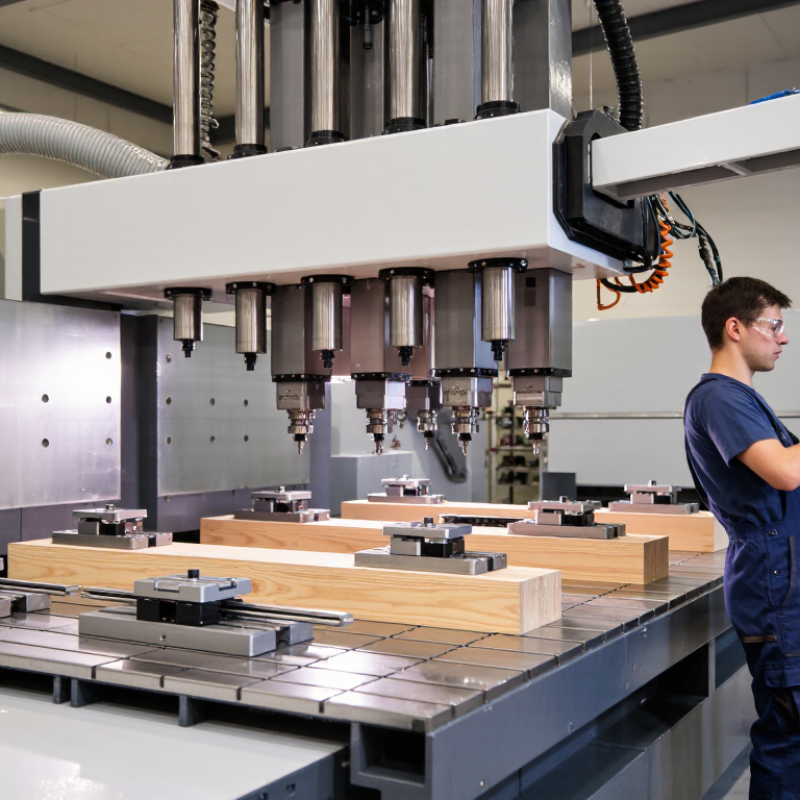
Choosing the best Multi Hole Drilling Machine in China depends on the parts you make, not just the machine’s price or advertised speed. A cabinet-door workshop may need evenly spaced holes across wide panels, while a metalworking shop may require accurate patterns in smaller, thicker components. These jobs place different demands on spindle layout, drilling depth, feed control, and workpiece support. The right comparison starts with your actual drawings, materials, and daily production volume.
Look closely at the machine’s working dimensions and the number of holes it can drill in one cycle. Ask suppliers for a demonstration using material similar to yours. Watch how the panel is positioned, how each spindle engages, and whether chips are cleared cleanly. Small details matter. A clear control interface, accessible maintenance points, and dependable clamping can save time over months of production. Request practical information about accuracy, tooling compatibility, installation, operator training, and spare-part availability. Where possible, review documented test results rather than relying on broad claims.
There is no single model that suits every factory. Some specifications may look impressive on paper but prove less useful with your parts or operators. That is worth questioning. This guide explains the key machine types, features, and supplier checks that help buyers make a more informed choice. It also considers the trade-offs between automation, flexibility, and budget, so you can judge which machine fits your production needs.
Define the Best by Hole Count, Accuracy, Cycle Time, and Total Cost
What Is the Best Multi Hole Drilling Machine in China?
The best machine is not simply the one with the most spindles. Compare usable hole count, positional accuracy, complete cycle time, and total cost per accepted workpiece. The International Federation of Robotics reported 4,281,585 industrial robots operating worldwide in 2023, a 10% increase over 2022. That figure does not prove a drilling machine is faster, but it highlights the value of repeatable setups and automation-ready controls. More holes help. Only when every spindle matches the part drawing.
Ask for a run-off using your actual panel material, drill sizes, and hole pattern. Check repeatability against the required tolerance; ISO 230-2:2014 describes methods for testing positioning accuracy and repeatability on numerically controlled machine axes. Time the full cycle, including loading, clamping, repositioning, and unloading—not just spindle movement. Run the test across several batches. One clean sample can mislead.
Then calculate cost per accepted part, including labor, tooling, energy, maintenance, downtime, and rejected panels. A high-speed machine may look efficient on paper, yet frequent tool changes can erase the gain. A lower spindle count may be the better fit for mixed orders. I would still question any quote that promises output without stating the test material, pattern, and acceptance criteria.
Compare Multi-Spindle, Gang-Drill, and CNC Machine Configurations
The best multi-hole drilling machine depends on the hole pattern, workpiece, tolerance, and daily production volume. Multi-spindle machines drill several holes in one cycle, making them suitable for repeat parts with consistent spacing. Spindle positions may be fixed or adjustable, depending on the configuration. Setup matters. A poorly located fixture can create spacing errors across every part.
Gang-drill machines arrange multiple drilling heads along a worktable. The operator moves the workpiece from one station to the next, with each head performing a different operation. This can suit parts needing several hole sizes or sequential steps. The trade-off is extra handling, which may slow output and affect positioning. Not always.
CNC machines use programmed coordinates to produce varied hole patterns and support quicker changeovers between jobs. They can be useful for low-to-medium volumes or parts with changing layouts, though programming and setup require skilled staff. A single-spindle CNC may take longer per part than a dedicated multi-spindle machine. Compare spindle count, spacing, stroke, workpiece capacity, fixture design, and required accuracy. I would not judge a machine by spindle count alone; actual cycle time depends on the part and its setup.
What Is the Best Multi Hole Drilling Machine in China?
A practical comparison of multi-spindle, gang-drill, and CNC configurations
Relative capability ratings (1 = lower, 5 = higher) reflect typical machine configurations, not standardized performance measurements. Multi-spindle machines favor repeating fixed hole patterns; gang drills suit sequential operations with dedicated setups; CNC machines offer the greatest pattern flexibility. Actual output depends on the workpiece, tooling, cycle design, and machine specification.
Evaluate Positioning Accuracy Using ISO 230-2 Machine-Tool Tests
Choosing the best multi-hole drilling machine in China takes more than comparing spindle count or feed speed. Positioning accuracy deserves a close look. ISO 230-2 provides tests for the positioning accuracy and repeatability of numerically controlled machine-tool axes. A laser interferometer can measure how closely an axis reaches programmed positions along its travel.
A useful report shows the tested axis, target positions, approach direction, measured deviations, and test conditions. Bidirectional measurements matter because an axis may behave differently when it reverses direction. Temperature should also be recorded; even small changes can affect readings. There is a catch. An ISO 230-2 result describes axis positioning, not the finished hole pattern by itself.
For a multi-hole drilling machine, compare test results under similar conditions and ask whether compensation values were active. Then consider spindle runout, fixture stability, tool condition, and thermal effects. These can shift hole locations even when an axis test looks strong. The distinction is easy to miss. A careful evaluation combines the ISO test report with a practical drilling trial, measuring hole centers across the workpiece. No single number settles the choice, and the test setup may not match daily production perfectly. That limitation should be stated, not hidden.
Match Drill Depth to Tool Geometry: Typical Twist Drills Reach 3–5×D
For a multi-hole drilling machine, depth should be selected from the drill’s geometry, not just the machine’s Z-axis travel. A conventional twist drill is commonly planned for holes around 3–5 times its diameter (3–5×D). A 10 mm drill, for example, usually suits a 30–50 mm hole. This is a practical range, not a guarantee. Machinery’s Handbook, 31st edition, covers twist-drill geometry and drilling calculations; ISO 235:2016 specifies common drill dimensions, not a universal maximum hole depth.
Beyond that range, chips have less room to escape, heat builds near the cutting edges, and the hole may wander. Watch for long, tightly packed chips and a rough, noisy cut. Small details matter: a sharp drill, suitable feed, secure workholding, and effective coolant or chip clearing can change the result. For repeated holes, test the deepest feature in the actual material before fixing the cycle time. A machine with many spindles can amplify a poor setup across every hole. That part is easy to underestimate. The 3–5×D rule is useful, but real materials and setup rigidity still deserve a trial cut.
What Is the Best Multi Hole Drilling Machine in China? - Match Drill Depth to Tool Geometry: Typical Twist Drills Reach 3–5×D
| Hole-depth range | Typical tool geometry | Multi-hole machine setup to consider | Practical selection notes |
| Up to 3×D | Standard-length twist drill; conventional point geometry selected for the work material. | Fixed multi-spindle head or CNC drilling setup, with a rigid fixture and accurately located workpiece. | A practical choice for many shallow, repeated holes. Confirm spindle spacing, tool clearance, and chip evacuation. |
| 3–5×D | Typical twist-drill depth range; performance depends on drill design, material, and cutting conditions. | A rigid multi-spindle machine or CNC arrangement with suitable coolant delivery and a planned chip-clearing strategy. | Check chip packing and hole quality. Peck drilling may be appropriate, depending on material, drill geometry, and coolant access. |
| 5–10×D | Long-series or deep-hole drill; geometry and coolant arrangement should be selected for the application. | CNC-controlled drilling is often useful for managing feed, retracts, and coolant. Verify tool overhang and machine rigidity. | A standard twist drill may not reliably cover this range in every material. Run a process trial to assess straightness, finish, and chip removal. |
| Beyond 10×D | Specialized deep-hole tooling, such as gun-drilling or BTA systems, where suitable for the hole diameter and setup. | Dedicated deep-hole equipment or a purpose-designed CNC process with the required high-pressure coolant and chip handling. | Do not assume a conventional multi-spindle twist-drilling setup is suitable. Review depth, diameter, tolerance, and workpiece access with the tooling supplier. |
| Any depth with many holes | Tool type matched to depth, material, hole diameter, and required tolerance. | Choose between a fixed multi-spindle head and CNC-controlled drilling based on hole pattern changes, setup frequency, and required flexibility. | Compare hole-position accuracy, spindle layout, fixture repeatability, coolant access, and total cycle time using the actual workpiece. |
D = drill diameter; depth-to-diameter ratios are general guidance, not guaranteed limits. Actual results vary with material, drill geometry, coolant, machine rigidity, and process parameters.
Verify China Suppliers Through ISO 9001, CE Documentation, and Service Terms
When comparing multi-hole drilling machines in China, verify the supplier before judging price or output claims. Ask for an ISO 9001 certificate and check its issuer, validity, and scope. The scope should match the supplier’s manufacturing or quality activities, not an unrelated business. ISO 9001 concerns a quality management system; it does not certify a particular machine. That distinction matters.
Request the CE Declaration of Conformity and supporting technical documents for the exact machine configuration you plan to buy. Check that the model details match the quotation and nameplate, and confirm which standards and directives the supplier says apply. CE paperwork is not a general quality guarantee. Ask questions if documents look incomplete or refer to another model. If possible, arrange a video test using your material, hole pattern, and required spacing. Watch the feed, clamping, and finished holes. Small details count.
Read the service terms before paying a deposit. Get warranty duration, exclusions, response times, spare-parts availability, and commissioning support in writing. Clarify who covers travel and shipping costs if a fault appears. A friendly sales call is reassuring, but it is not a service plan. Ask for a sample maintenance schedule and a clear escalation contact. Paperwork can still be imperfect; compare it with the machine and the supplier’s answers, then record any gaps before ordering.
