Mon - Fri 8:00AM - 5:00PM Central
1150 SE Hamblen Rd, Lee's Summit, MO 64081
Choosing China’s best Industrial Cable Reel manufacturer starts with your operating conditions, not a polished catalog. A reel used on a factory floor faces different demands from one installed on a service vehicle. Consider cable length, conductor size, voltage, current, duty cycle, and working environment. These details shape the drum, slip ring, drive system, and enclosure. Small omissions matter.
Ask manufacturers for drawings, material specifications, inspection procedures, and test records relevant to your application. Check how they manage cable winding, strain relief, grounding, and overheating risks. A well-built reel should wind smoothly and protect the cable from sharp bends, dust, and routine impact. Ask what happens when a component needs replacement. Clear answers are useful. Vague promises are not.
Production capability matters, but so does communication. Compare response times, engineering support, sample availability, and experience with similar installations. Request references or project examples where appropriate, then verify that the operating conditions genuinely match yours. Certifications can support a decision, but they do not replace checking the actual product and its documentation. One detail is easy to overlook: a reel that works in a factory may perform poorly outdoors. Confirm temperature, moisture, corrosion, and mounting requirements before ordering. There is no universal winner. The best manufacturer is the one that can demonstrate a suitable design, consistent quality controls, and dependable support for your specific use. Even then, inspect the delivered unit. Plans and production do not always align perfectly.
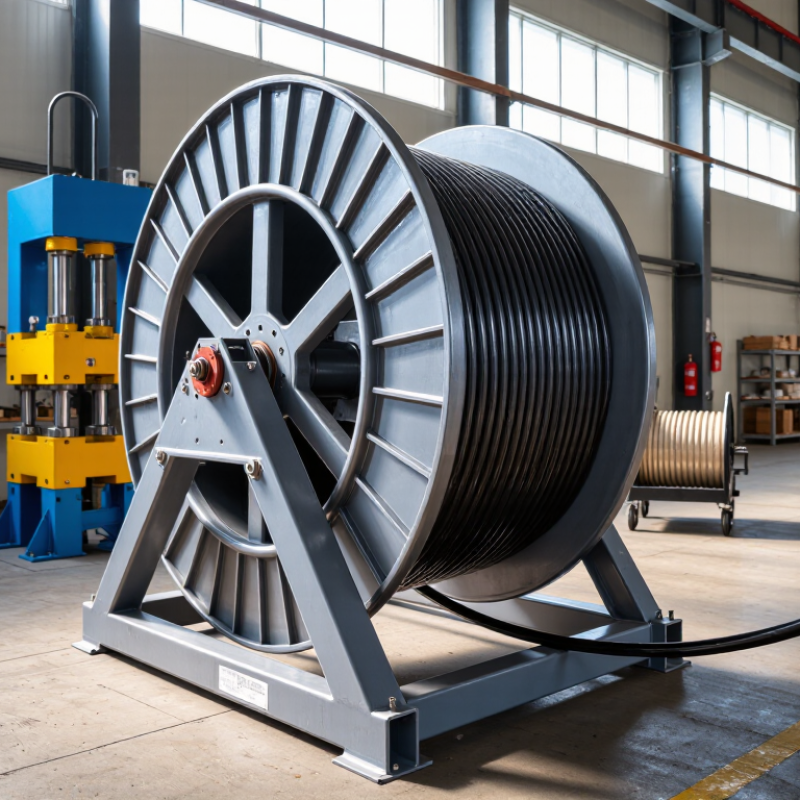
An industrial cable reel is a device that stores and manages electrical cable, hose, or wire. It holds the line on a rotating drum, helping users unwind the length they need and rewind it after work. A typical reel includes a drum, frame, axle, and handle or drive mechanism. Some models also use a slip ring to maintain an electrical connection while the drum turns. That detail matters.
On a workshop floor, a reel can keep a heavy power cable off wet concrete and away from passing carts. In a warehouse, it may supply equipment across a changing work area. The reel’s size, cable capacity, and load rating should match the actual job. A reel that is too small may strain the cable; one that is poorly mounted can tip or bind. Simple, but easy to overlook.
“Industrial” does not describe one universal design. Reels vary by cable type, operating environment, and how often workers pull or retract the line. Manual models suit some tasks; spring-driven or motorized versions may be more practical for frequent use. Check the cable’s bend limits and the reel’s rated capacity before installation. Also inspect for wear, dirt, and loose fittings. A tidy reel helps, but it cannot fix a damaged cable. Real work is rarely as neat as a product diagram.
Industrial cable reels made in China generally fall into several practical categories: manual, spring-driven, motorized, and portable reels. Manual models use a hand crank and suit shorter cable runs or work areas where power is unavailable. They are simple. But winding a heavy cable by hand can become tiring during repeated shifts.
Spring-driven reels retract cable automatically after use. They are often mounted on ceilings, walls, or workbenches, keeping cables off the floor. Motorized reels handle longer or heavier cable runs, with electric or pneumatic drives controlling winding. For outdoor maintenance, mobile reels with a frame and wheels can be easier to move between work zones. Details matter: cable length, conductor size, voltage rating, duty cycle, and mounting position should match the actual job.
In factory settings, a reel’s enclosure and winding mechanism affect how well it tolerates dust, moisture, and frequent movement. Ask for rated load and operating-temperature data, not just a product photo. I would not assume a larger reel is always better. A reel that is too small may strain the cable; an oversized one can waste space and complicate installation. Also check the connector type and how the cable exits the drum. Small differences can cause awkward routing.
An industrial cable reel is designed around its duty cycle, not just its drum size. Engineers calculate cable length, voltage, current, travel speed, bend radius, and ambient temperature. These figures determine the drum diameter, flange width, drive type, and braking method. A tight bend can damage insulation over time. Small details matter.
Manufacturing typically begins with a load-rated steel or engineered-polymer frame. Cut parts are formed, welded, and checked for alignment before corrosion protection is applied. The cable is then wound evenly, with guides preventing overlap and crushing. Powered reels may include a motor, gearbox, brake, and electrical slip ring. Each assembly needs checks for rotation, cable continuity, insulation resistance, and rated-load performance. IEA’s Energy Efficiency 2023 report estimates that industry accounts for about 37% of global final energy use, making dependable equipment a practical efficiency concern.
Design reviews should also account for dust, moisture, vibration, and repeated starts. In practice, teams can underestimate heat buildup inside a tightly packed drum. That deserves another check. Manufacturers should document material specifications, test results, and operating limits, then verify the finished reel under realistic conditions. A smooth test run is useful, but it cannot replace checking the actual cable path and installation environment.
Industrial cable reels are engineered for the cable, operating environment, travel distance, and duty cycle of a specific installation. The values below are representative design considerations, not universal specifications; final ratings require application-specific calculations and validation.
| Design or Manufacturing Stage | Key Inputs and Typical Considerations | Engineering or Production Method | Verification and Quality Checks |
|---|---|---|---|
| Application definition | Moving equipment, cable route, travel length, installation position, operating speed, and expected duty cycle. | Define whether the reel is spring-driven, motor-driven, or manually operated. Establish the operating sequence and mounting arrangement before sizing components. | Review the installation layout, operating requirements, and environmental conditions with the equipment designer. |
| Cable specification | Cable outside diameter, mass per unit length, minimum bend radius, conductor arrangement, voltage rating, and permissible tensile load. | Select a cable suitable for repeated flexing and the intended environment. Confirm that the reel’s winding geometry respects the cable manufacturer’s bend-radius guidance. | Check cable datasheets and verify the actual cable diameter and mass before finalizing the reel design. |
| Reel capacity and drum geometry | Required cable length, drum core diameter, winding width, flange diameter, and number of cable layers. | Calculate capacity using the cable diameter and winding space, allowing for orderly winding and clearance. The core diameter must be compatible with the cable’s minimum bend radius. | Confirm the calculated capacity against the required working length and check that the wound cable remains within the flange envelope. |
| Structural design | Wound-cable mass, reel rotation, support span, mounting loads, shock, and vibration. | Size the drum, flanges, shaft, and support frame for the applicable static and dynamic loads. Materials may include fabricated steel or aluminum, depending on load and environment. | Review drawings and calculations for load paths, deflection, clearances, and suitable safety factors under the project’s design criteria. |
| Drive and rewind system | Required cable tension, travel, speed, acceleration, and rewind behavior. | Choose a spring, electric motor, or manual drive to suit the application. For powered systems, select the drive and controls based on torque, speed, and operating duty. | Test rewind and payout through the required travel range; check tension, tracking, and stopping behavior. |
| Electrical transfer | Number of circuits, current, voltage, signal type, and whether continuous rotation is required. | Where electrical continuity is needed during reel rotation, integrate a slip-ring assembly rated for the specified circuits and operating conditions. Some applications instead use a fixed cable connection or limited rotation. | Check circuit continuity, insulation, grounding arrangements, and electrical ratings against the project specification. |
| Bearings, shaft, and braking | Radial and axial loads, rotational speed, operating temperature, and risk of uncontrolled payout. | Select bearings and shaft dimensions for the calculated loads and service conditions. Add a brake or holding feature when required by the operating design. | Inspect shaft alignment and bearing installation; verify smooth rotation and the specified holding or braking function. |
| Fabrication and assembly | Approved drawings, material specifications, tolerances, weld requirements, and surface-finish requirements. | Cut and form components, fabricate the frame and drum, machine interfaces where needed, and assemble the shaft, bearings, drive, and electrical components. | Perform dimensional inspection and visual checks of welds, fasteners, alignment, and component fit before finishing. |
| Surface protection | Indoor or outdoor use, humidity, corrosive exposure, cleaning agents, and temperature range. | Specify a suitable coating or material finish for the service environment. Surface preparation and coating system should follow the project requirements. | Inspect coating coverage and finish; verify any specified coating thickness or corrosion-protection requirements. |
| Final inspection and testing | Customer acceptance criteria, rated operating conditions, safety requirements, and documentation needs. | Complete assembly checks and application-relevant functional tests. Test procedures should be defined for the reel type and project rather than assumed to be identical for every unit. | Record inspection and test results, confirm identification and documentation, and resolve nonconformities before shipment. |
Choosing an industrial cable reel manufacturer starts with the reel’s actual working conditions. Check rated voltage, current, cable length, and operating temperature against your equipment requirements. A reel used near dust or moisture also needs suitable enclosure protection. Ask how the rating was tested, not just what appears on the product sheet. Small details matter.
Inspect the cable’s insulation, conductor size, and flexibility, then check the drum, shaft, and winding mechanism for sturdy construction. Smooth retraction should not jerk or leave loose cable loops. Ask for test records covering electrical continuity, insulation performance, load capacity, and repeated winding cycles. Compare the documented results with your intended duty cycle. A polished sample helps, but it cannot prove long-term reliability; that gap is easy to overlook. One limitation: field conditions often differ from controlled tests, so maintenance access and replacement-part availability deserve attention too.
Tips: Request a sample and inspect its edges, strain relief, and labels. Ask what changes when the reel runs continuously rather than occasionally. Keep the questions specific. A clear answer is useful; vague assurances are not.
Choosing a supplier takes more than comparing prices. Ask for rated voltage, current, cable length, duty cycle, winding speed, and operating temperature. Check whether the reel’s enclosure rating suits your actual environment, including dust, moisture, and washdown exposure. For industrial cable reels, IEC 61316 provides a relevant product standard; request test records that show how the offered model was assessed.
The World Bank’s 2023 Logistics Performance Index scored China 3.7 out of 5, ranking it 19th among 139 economies. This is useful context, not proof that one factory ships reliably. Ask for recent lead-time records, packaging photos, and a written process for reporting delays. A polished catalog can still distract buyers from missing test evidence; even experienced purchasing teams can overlook that gap.
ISO’s 2023 Survey recorded more than 1.2 million ISO 9001 certificates worldwide. Certification can indicate a documented quality system, but it does not verify a particular reel’s performance. Request the certificate’s scope and issuing-body details, then compare them with the production site. For a shortlisted model, review wiring diagrams, inspection criteria, traceability records, and sample test results. If possible, inspect a reel under load and check cable tracking, brake response, and slip-ring temperature. A short factory visit may not reveal everything, so keep acceptance criteria in writing.
