CONTACT PHONE 816-380-4747
OPEN HOURS

Mon - Fri 8:00AM - 5:00PM Central

ADDRESS

1150 SE Hamblen Rd, Lee's Summit, MO 64081

How to Choose the Best Hex Bolt Nut for Global Buyers?

Choosing the best Hex Bolt Nut is not simply a matter of comparing prices. Global buyers must match the fastener with the application, environment, and assembly method. A bolt used on outdoor machinery faces different demands from one installed inside a dry workshop. Thread size, pitch, grade, coating, and nut compatibility all influence performance. Small details matter.

Experienced procurement teams usually begin with the drawing, load requirements, and installation conditions. They check whether the fastener follows recognized standards, such as ISO, DIN, or ASTM specifications. Material selection also deserves careful attention. Carbon steel may suit general construction, while stainless steel can offer better corrosion resistance in humid environments. However, stainless steel is not automatically the strongest choice. That assumption causes problems.

Reliable suppliers should provide clear product data, inspection records, material certificates, and traceability information. Samples can reveal more than attractive catalog photographs. Measure the thread with a gauge. Inspect the zinc coating under strong light. Test several pieces for fit and surface defects. Independent laboratory verification may be appropriate for critical applications. Documentation must match the actual shipment, not an older batch. This is where rushed purchasing often becomes expensive.

Global buyers should also examine packaging, labeling, tolerances, minimum order quantities, and communication quality. A technically suitable Hex Bolt Nut may still create delays if cartons are poorly marked or dimensions are misunderstood. Supplier experience, production controls, and after-sales responsiveness provide useful evidence of reliability. No selection process is perfect. Rechecking assumptions before approval remains a practical habit. The right decision balances safety, service life, compliance, availability, and total cost rather than choosing the lowest quotation.
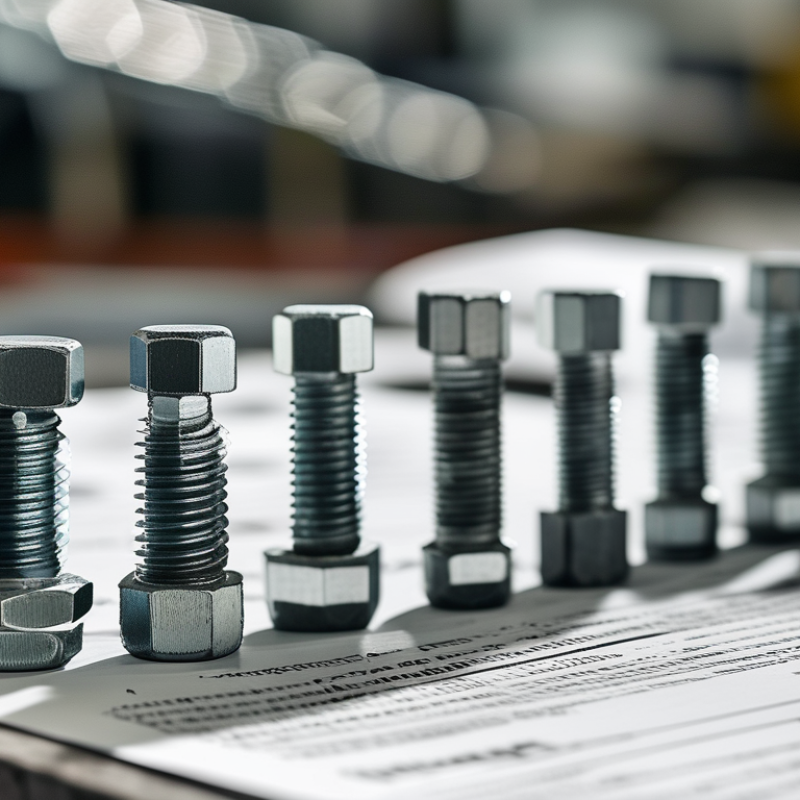
How to Choose the Best Hex Bolt Nut for Global Buyers?

Define Hex Bolt Nut Types and Their Global Applications

Choosing a hex bolt nut starts with the joint, not the catalog photograph. In field inspections, I check load direction, vibration, space, corrosion, and installation tools. A standard hex nut suits general equipment connections. A heavy hex nut provides more bearing area for demanding assemblies. A flange nut spreads pressure across thin brackets. Fit matters.

For vibrating machinery, a nylon-insert lock nut can resist loosening within its service temperature range. An all-metal prevailing-torque nut handles higher heat, but installation may require more effort. Fine threads support precise adjustment and stronger tensile engagement. Coarse threads install faster and tolerate dirt better. Match the nut with the bolt diameter, pitch, strength class, and thread system. Metric and inch threads must never be mixed. That mistake is costly.

Global applications include solar frames, agricultural equipment, bridges, pumps, and factory conveyors. Zinc-coated steel suits many dry indoor settings, while stainless steel helps resist moisture. Material compatibility still needs checking because dissimilar metals can accelerate corrosion. I would verify certificates, dimensions, torque guidance, and sampling records before shipment. Specifications are not infallible. Temperature, surface condition, and operator technique can change performance. A nut that fits perfectly in a warehouse may fail in a coastal installation.

Match Bolt and Nut Dimensions, Threads, and Strength Grades

How to Choose the Best Hex Bolt Nut for Global Buyers?

Matching a hex bolt with the correct nut starts with accurate dimensions. Check the bolt diameter, length, head size, and bearing surface. A 12 mm bolt needs a nut with the same nominal diameter. Metric and imperial threads are not interchangeable. They may look similar at a glance. Do not rely on appearance.

Thread pitch also matters. Coarse threads suit general assembly and tolerate minor contamination. Fine threads provide better adjustment and clamping control. Confirm the pitch from a technical drawing, sample, or calibrated thread gauge. Measure several pieces from each production batch. One sample can hide a wider issue. This step is often skipped under delivery pressure.

Strength grades must match the application, not just the purchase price. Review the bolt marking, nut grade, material, and required preload. A high-strength bolt paired with a weaker nut may fail during tightening. Coatings can also change friction and torque results. Ask for material certificates, dimensional inspection records, and test reports from a qualified laboratory. Verify whether the stated standard matches the project specification. In real procurement work, mismatched standards create costly rework. I have seen teams focus on tensile strength while overlooking thread fit. That was a poor assumption. Consider temperature, vibration, corrosion exposure, and installation tools before approving the combination. Keep the inspection criteria written and measurable.

Select Materials and Coatings for Environment and Corrosion Resistance

How to Choose the Best Hex Bolt Nut for Global Buyers?

Material selection should begin with the working environment, not the purchase price. In dry indoor areas, zinc-plated carbon steel often provides practical protection and stable strength. Outdoor sites need more attention. Rain, humidity, and road salt can quickly attack exposed steel. Stainless steel suits many wet applications, while molybdenum-bearing grades perform better near coastal chloride exposure. However, stainless steel is not automatically corrosion-proof.

Match the bolt, nut, and washer materials carefully. Dissimilar metals can create galvanic corrosion, especially when moisture bridges the joint. I once reviewed a failed outdoor connection where the bolt looked sound, but the washer had trapped salty water underneath. The specification was incomplete. Small details matter. Check temperature, chemical contact, drainage, and expected service life before selecting a grade. Mechanical strength also matters. A corrosion-resistant fastener may not meet the required tensile or fatigue performance.

Coatings add another layer of protection. Electroplated zinc works well in controlled environments, while hot-dip galvanizing offers a thicker barrier for construction and exposed steelwork. For high-strength fasteners, coating processes require careful control because improper treatment may increase hydrogen embrittlement risk. Ask suppliers for coating thickness, salt-spray data, batch traceability, and inspection records. Standards such as ISO 898-1 can help verify mechanical properties, but test results should match the actual environment. Salt-spray performance is useful, yet it cannot perfectly predict every field condition. That limitation deserves attention.

Check International Standards, Tolerances, and Quality Certifications

For global buyers, a hex bolt and nut should be selected by standard, not appearance. ISO 898-1 defines mechanical properties for carbon and alloy steel bolts. ISO 898-2 covers matching nuts. Their property classes must agree, such as 8.8 bolts with suitable class 8 nuts. Mixing grades can cause thread damage or sudden failure.

Thread tolerance also matters. ISO 965 specifies metric thread limits and fits, while ASME B1.1 applies to unified inch threads. A gauge check is more dependable than visual inspection. ASTM F606/F606M provides test methods for hardness, proof load, tensile strength, and dimensional checks. The 2024 Fortune Business Insights fastener market report estimates the global market at more than USD 90 billion, showing how widely these components are traded. However, market size does not prove supplier quality. That assumption is easy to make.

Tips: Request the material certificate, test report, lot number, and coating details. Check whether the supplier operates an ISO 9001-certified quality system. For safety-critical use, ask for third-party inspection and sample testing. Confirm torque results under actual surface conditions, because zinc coating, lubrication, and temperature can change friction significantly. A certificate can be genuine yet incomplete. Verify its scope and issuing laboratory.

A practical buyer should compare tolerances, not only unit prices. Measure thread pitch, shank diameter, bearing surface, and nut engagement on received samples. Keep inspection records with photographs. Recheck them after supplier changes. Small errors often survive routine purchasing checks.

How to Choose the Best Hex Bolt Nut for Global Buyers? — Check International Standards, Tolerances, and Quality Certifications
Selection Dimension Recommended Reference Verified Technical Data What Global Buyers Should Check
Product Standards and Dimensions
Hexagon head bolt, partially threaded ISO 4014 Metric coarse-thread hexagon head bolt with a shank and incomplete thread. Product dimensions are defined by the standard. Confirm nominal diameter, length, thread length, head height, across-flats dimension, and product grade before ordering.
Hexagon head bolt, fully threaded ISO 4017 Metric coarse-thread hexagon head screw with a fully threaded shank. Use this format where the complete threaded length is required. Do not substitute it for ISO 4014 without checking joint design.
Hexagon nut ISO 4032 Standard-style metric hexagon nut for use with compatible metric bolts and screws. Check nominal diameter, thread pitch, nut height, across-flats dimension, material, property class, and finish.
Common metric coarse-thread examples ISO metric thread system M8 × 1.25: 13 mm across flats;
M10 × 1.50: 16 or 17 mm across flats depending on the applicable product standard and revision;
M12 × 1.75: 18 or 19 mm across flats depending on the applicable product standard and revision;
M16 × 2.00: 24 mm across flats.
Always specify the complete product standard and revision because dimensional details may differ between ISO, DIN, and ASME product standards.
Alternative dimensional systems ASME B18.2.1 and ASME B18.2.2 Inch-series dimensions for square and hex bolts, screws, and nuts. Do not mix inch-series bolts and nuts with ISO metric threads. Confirm whether the purchase specification is metric or inch-based.
Thread Tolerances and Fit
External metric thread tolerance ISO 965-1 and ISO 965-2 6g is a commonly specified tolerance class for standard external metric threads. Specify the thread tolerance class, nominal diameter, and pitch, such as M12 × 1.75–6g.
Internal metric thread tolerance ISO 965-1 and ISO 965-2 6H is a commonly specified tolerance class for standard internal metric threads. For a typical ISO fit, a 6g external thread is paired with a 6H internal thread. Verify the required clearance, coating allowance, and gauge results.
Product dimensional tolerances ISO 4759-1 Defines tolerances for dimensions of fasteners and provides product-grade requirements, including commonly used grades A and B. Request dimensional inspection records for critical dimensions such as thread diameter, head height, across flats, and bearing surface.
Mechanical Properties and Materials
Carbon or alloy steel bolt property class ISO 898-1 Typical minimum values:
Class 8.8: nominal tensile strength 800 MPa; nominal yield ratio 0.8;
Class 10.9: nominal tensile strength 1,000 MPa; nominal yield ratio 0.9;
Class 12.9: nominal tensile strength 1,200 MPa; nominal yield ratio 0.9.
Confirm the exact minimum tensile strength, proof load, yield or stress-under-proof-load requirement, hardness, and test method for the specified diameter range.
Carbon or alloy steel nut property class ISO 898-2 Nut property classes are defined separately from bolt classes and are verified mainly through proof-load requirements and dimensional limits. Select a nut class compatible with the bolt class. A nut should not be selected only by matching the numerical class marking.
Stainless steel fasteners ISO 3506-1 for bolts; ISO 3506-2 for nuts Common stainless designations include A2 for general corrosion resistance and A4 for improved resistance in many marine or chloride environments. Property designations such as 70 and 80 indicate minimum tensile-strength categories in the standard. Check stainless group, property designation, magnetic characteristics, corrosion environment, galling risk, and compatibility between bolt and nut materials.
Coatings, Corrosion, and Traceability
Electroplated metallic coatings ISO 4042 Provides requirements for electroplated coating systems on threaded fasteners, including coating designation and functional considerations. Specify coating type, corrosion-resistance requirement, coating thickness or system designation, friction requirements, and hydrogen-embrittlement controls for high-strength steel.
Zinc flake coatings ISO 10683 Non-electrolytically applied zinc flake coating systems for threaded fasteners. Confirm coating system, corrosion test requirement, friction coefficient range, curing process, and whether additional topcoat or sealing is required.
Material and test certificate EN 10204 2.1: declaration of compliance without specific inspection results;
2.2: test report with non-specific inspection results;
3.1: inspection certificate with specific inspection results validated by the manufacturer's authorized inspection representative.
For safety-critical or regulated applications, specify the required certificate type before production and ensure heat, lot, chemical, mechanical, and dimensional traceability.
Quality Management and Inspection
Quality management system ISO 9001 Certifies that an organization operates a quality management system meeting the requirements of ISO 9001; it does not by itself certify that every fastener meets a particular product standard. Verify certificate scope, validity, issuing certification body, manufacturing location, and whether the scope covers fastener production and inspection.
Acceptance inspection Applicable product standard and purchase specification Typical checks include visual condition, dimensions, thread gauges, material composition, hardness, tensile or proof-load performance, coating condition, and packaging identification. Define sampling plan, inspection level, acceptable quality limits, test laboratory requirements, nonconformity handling, and document-retention period.
Lot identification and marking Applicable ISO or national fastener marking requirements Many standardized high-strength fasteners require identification of the manufacturer or producer and the applicable property class, where the standard and size range require marking. Match head or nut markings with the certificate, heat or lot number, packing label, purchase order, and inspection report.
Recommended Purchasing Specification
Complete example of a buyer's specification Structured technical description M12 × 1.75 × 80, ISO 4014, steel property class 8.8 to ISO 898-1, matching ISO 4032 nut to ISO 898-2, external thread 6g, specified surface finish to ISO 4042, EN 10204 3.1 certificate, and dimensional inspection report. Add quantity, delivery condition, packaging, corrosion requirement, lubrication or friction requirement, inspection plan, certificate language, and applicable drawing revision.
Important: Standards, editions, dimensions, coatings, and property requirements must be checked against the latest applicable revision and the buyer's engineering drawing. For safety-critical joints, final bolt and nut selection should be validated by the responsible design engineer.

Evaluate Suppliers, Costs, Packaging, and Export Requirements

Choosing the best hex bolt nut begins with supplier verification, not a low unit price. Request material certificates, dimensional inspection reports, and thread tolerance records. Confirm whether the supplier controls heat treatment and surface coating internally. Ask for recent production samples, packed exactly as they will ship. Small details matter.

A low quote can look impressive, but I have learned to question it. Compare total landed cost, including tooling, inspection, freight, duties, and possible rework. Clarify minimum order quantities and price breaks in writing. A cheaper fastener may create delays if its coating fails during storage. That mistake is expensive. I still believe buyers sometimes overvalue price and undervalue consistency.

Packaging should protect threads from impact, moisture, and mixed-part confusion. Use strong cartons, inner bags, labels, and pallet wrapping suited to long transport. Each label should show size, grade, quantity, batch number, and country of origin when required. Export documents may include commercial invoices, packing lists, certificates of origin, and test reports. Check destination requirements before production, because rules and customer specifications can differ. Confirm the correct customs classification with a qualified trade professional. Do not assume a familiar bolt specification is accepted everywhere. A final pre-shipment inspection can catch wrong sizes, missing documents, or unreadable labels. It costs less than correcting a container after arrival.

How to Choose the Best Hex Bolt Nut for Global Buyers?

Estimated landed-cost structure for 1,000 standard hex bolt-and-nut sets, excluding import duty and local taxes.

Product price is only one part of the purchasing decision. Buyers should also evaluate freight, export packaging, pre-shipment inspection, and documentation costs. Confirm material grade, dimensions, coating, carton strength, labeling, Incoterms, and destination-country import requirements before placing an order.