How to Choose the Best Camera Module for Your Projects?
When embarking on a project that requires a camera module, several factors demand careful consideration. Technology has advanced rapidly, and choosing the right camera module can be daunting. Every project has unique needs, and understanding these needs is crucial. A high-resolution sensor might be necessary for detailed images, while low-light performance can be vital for night-time applications.
Moreover, not all camera modules are compatible with every platform. Checking hardware compatibility can save time and resources. Often, projects fail due to overlooked details in specifications. It's wise to consult reliable sources and reviews before making a purchase. Remember, the choice of a camera module greatly affects the final outcome of your project.
Finally, practical experience plays a significant role in selection. Knowing which features truly matter in real-world scenarios can guide you effectively. Engage with communities and forums for insights, as even minor advice can lead to a better choice. Reflecting on past projects can highlight what worked and what did not. Each decision in this process shapes the project's success.
Understanding the Different Types of Camera Modules Available
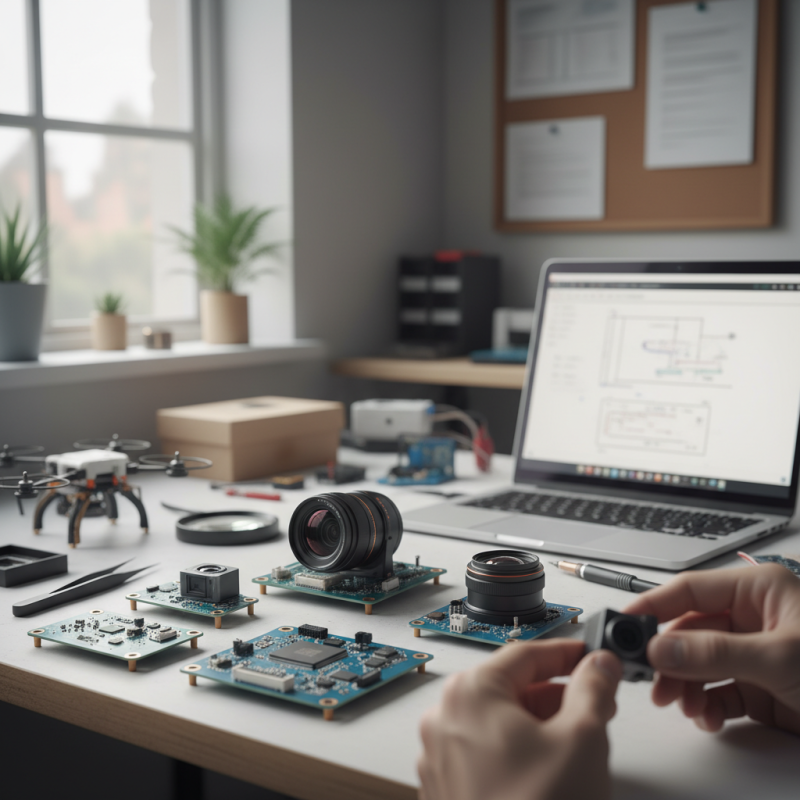
When selecting a camera module for your projects, it's essential to understand the various types available. Camera modules range widely in specifications and applications. Some are designed for basic imaging, while others boast advanced features like high resolution, low light performance, and image stabilization. Each type serves different needs, and understanding them can significantly enhance your project's outcome.
For instance, if your application requires capturing high-quality images in dim environments, consider a module with a larger sensor size. This often results in better low-light performance. In contrast, if your project is more about real-time streaming, a module with lower latency would be ideal. Consider your project requirements carefully before making a decision.
Tips: Always evaluate the resolution and field of view. A higher resolution offers more detail but may require more processing power. Think about your project’s limitations. Reflections on camera installation are vital, as improper angles can lead to image distortion. Ensure you secure your module to avoid any vibrations that could affect image quality. Balancing these aspects will lead to better results.
Key Specifications to Consider When Choosing a Camera Module
Choosing the right camera module requires attention to specific specifications. Resolution is a key factor. Higher resolution means clearer images, which is essential for detailed projects. A module with at least 1080p will likely suffice for most applications. However, it’s not always about resolution. Low light performance is crucial too. A module that works well in dim environments can greatly enhance usability.
Field of view (FOV) should also be considered. A wider FOV captures more of the scene, but it can introduce distortion. Moreover, lens quality reflects on the final image. An inexpensive module may produce fuzzy images in direct sunlight. Focus types, such as fixed or auto-focus, play a role in versatility. An auto-focus lens can be beneficial in dynamic scenarios, but fixed lenses are simpler.
Frame rate affects motion capture. Higher frame rates create smoother video, yet they may require more processing power. Additionally, check the connectivity options. USB and Wi-Fi might be more accessible for certain projects than others. Think about the installation space and the module’s physical size too. An overly bulky module can complicate designs. Each choice has trade-offs, which is vital for ensuring the module fits your project's needs.
Camera Module Specifications Comparison
Evaluating Image Quality and Performance Features in Camera Modules
When evaluating camera modules, image quality and performance features are crucial. Look for resolution, as higher pixels often result in clearer images. However, more pixels can mean larger file sizes. Balance is key. Dynamic range plays a role too; it impacts how well the module captures details in bright and dark areas.
Low-light performance is another vital aspect. A camera’s ability to function in dim conditions affects usability. Test how noise levels change in low-light environments. Check for advanced features like autofocus speed and stability. These can elevate your project's visual appeal but might not always be reliable.
Consider the overall package. The module's size and weight can limit application and integration. While you may seek compact options, they can sometimes compromise quality. It’s essential to reflect on your specific needs. Prioritize image quality but be mindful of performance constraints. Understanding these nuances can lead to more informed choices.
Assessing Compatibility with Your Project's Hardware and Software
When choosing a camera module, compatibility with your project’s hardware and software is crucial. Begin by assessing the connection types your hardware supports. Many modules use interfaces like USB, I2C, or SPI. Ensure your chosen camera can integrate seamlessly with your existing setup. A mismatch can lead to frustrating debugging sessions, delaying your project timeline.
Next, consider the software requirements. Some camera modules come with drivers and libraries that simplify integration. Verify whether these are compatible with your operating system and programming languages. Lack of proper software support can hinder functionality, causing unexpected challenges. It's wise to read documentation and user experiences related to your selected camera module.
Testing the module with a prototype can reveal potential issues. This step is often overlooked but can save time and resources. Sometimes, integration may not be as smooth as anticipated. Be open to adjusting your project requirements based on the camera’s capabilities. Flexibility can lead to unexpected improvements in your final output.
Budgeting: Cost-Effective Camera Modules for Your Projects
When selecting a camera module for projects, budgeting is crucial. Cost-effective options can deliver impressive performance and features. It’s vital to balance quality and price. Look out for modules that offer basics like resolution and frame rates at reasonable costs.
Consider what you truly need. Higher megapixels might sound appealing, but they can inflate costs unnecessarily. Sometimes, a lower-resolution module may suit your purpose just as well. Research is essential. User reviews and community feedback can guide you to good options that don’t break the bank.
Reflect on your project’s scope. A specialized camera might be tempting but can lead to overspending. Simple modules can often achieve desired results without additional expenditures. Be cautious of integrating expensive features that don’t add significant value. Focus on functionality over flashy specs.
How to Choose the Best Camera Module for Your Projects? - Budgeting: Cost-Effective Camera Modules for Your Projects
| Camera Module | Resolution | Frame Rate (fps) | Price (USD) | Ideal Use Case |
| Camera Module A | 1080p | 30 | 25 | Robotics |
| Camera Module B | 720p | 60 | 15 | Drones |
| Camera Module C | 4K | 30 | 50 | Surveillance |
| Camera Module D | VGA | 15 | 10 | Educational Projects |
| Camera Module E | 1080p | 120 | 35 | Home Automation |
