How to Choose the Right Pipeline Filter in 2026?
Choosing the right Pipeline Filter in 2026 is not a catalogue exercise. It is a process decision.
Dr. Richard Wakeman, a respected filtration researcher and co-author of Filtration: Principles and Practices, offers a useful warning: “Filter selection must begin with the process, not the product.” This principle remains practical. A filter handling cooling water may fail quickly when exposed to abrasive slurry, hot oil, or chemically aggressive cleaning fluids. The correct choice depends on flow rate, particle size, pressure, temperature, viscosity, and fluid compatibility.
Details matter.
A reliable evaluation should examine the filter’s micron rating, dirt-holding capacity, pressure-drop curve, sealing materials, and cleaning method. For example, a 100-micron screen may protect a pump, but it may not protect a sensitive control valve downstream. A larger housing can reduce pressure loss, while a smaller unit may require frequent maintenance. These trade-offs should appear in the design discussion.
There is no universal Pipeline Filter. That is easy to forget.
In real projects, specifications may look complete but still miss peak flow, startup conditions, or unexpected solids. I have also seen teams trust nominal micron ratings without checking test methods. That approach can create false confidence. Engineers should compare supplier data, inspect operating records, and, when possible, test representative fluid samples. The best decision balances protection, operating cost, maintenance access, and long-term reliability. Sometimes the most expensive filter is unnecessary. Sometimes the cheapest one becomes the costliest choice.
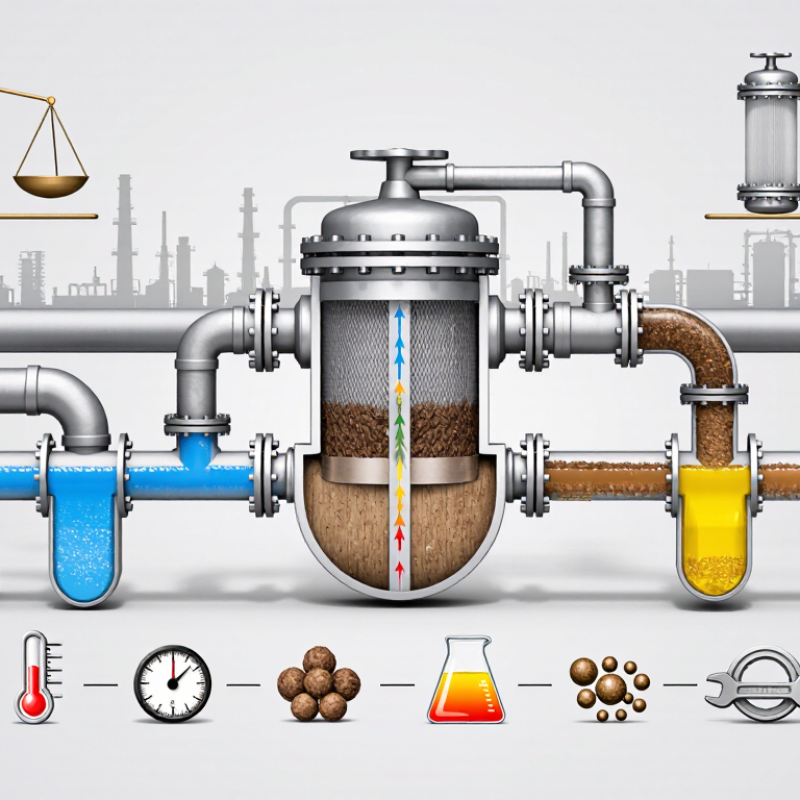
Understanding Pipeline Filter Types and Their Core Functions
How to Choose the Right Pipeline Filter in 2026?
Pipeline filters protect pumps, valves, meters, and process equipment from damaging solids. The right choice begins with the contaminant, not the filter’s appearance. Screen filters capture larger particles with a perforated surface. Strainers usually serve as coarse protection near pumps or pipeline inlets. Cartridge filters provide finer removal for controlled flow conditions. Bag filters hold more debris and support quick replacement. Depth filters trap particles throughout their internal structure, but they may create higher pressure loss.
Each filter type has a different core function. A screen filter supports continuous flow and simple cleaning. A cartridge filter targets precise particle removal. A bag filter suits applications with changing debris levels. For very fine particles, membrane-style filtration may work, but it demands careful pressure control. Real systems are less tidy. A filter rated at 10 microns may not remove every 10-micron particle under actual operating conditions.
Selection should consider flow rate, particle size, fluid temperature, chemical compatibility, and allowable pressure drop. Measure the pipeline pressure before and after installation. A rising difference often signals loading. One useful field practice is checking the filter housing during planned maintenance, not only after a failure. Oversizing can waste money and space. Undersizing can restrict flow quickly. That assumption can fail. Test samples, operating data, and maintenance records should guide the final decision. A clear service interval also improves reliability and worker safety.
Defining Filtration Requirements for Different Pipeline Systems
Choosing a pipeline filter in 2026 starts with defining the process, not browsing a product catalog. Every system carries a different filtration burden. Record fluid type, flow range, operating pressure, temperature, particle size, and contamination load. These details determine whether a strainer, cartridge unit, bag filter, or self-cleaning system is appropriate. A filter rated only by nominal micron size can mislead. Ask whether the process needs absolute retention, cleanability, or uninterrupted flow. Small oversight, large consequence.
Water lines may prioritize turbidity control and corrosion-resistant materials. Hydraulic systems often need fine particle removal without excessive pressure loss. Compressed-gas pipelines require attention to liquid carryover, coalescing performance, and safe condensate drainage. Chemical services demand verified compatibility with the fluid, seals, and cleaning chemicals. In food or pharmaceutical environments, hygienic geometry and documented materials matter. Wastewater applications may need coarse screening before finer polishing. The right specification changes with the duty.
Size the housing for normal and peak flow, then check differential pressure at both conditions. Install gauges upstream and downstream. Their readings reveal loading before performance collapses. Field inspections often show that maintenance access is underestimated. Leave room for element removal, isolation, and safe drainage. Duplex arrangements can support continuous operation, but they add valves and inspection points. That trade-off deserves honest review. Real contamination is rarely uniform; fibers, rust flakes, and soft solids behave differently from test dust. A monitored trial may expose weaknesses before full installation. Maintenance logs and pressure trends often reveal more than a brochure.
How to Choose the Right Pipeline Filter in 2026?
Defining Filtration Requirements for Different Pipeline Systems
Filtration ratings depend on the fluid, particle load, equipment sensitivity, operating pressure, flow rate, and acceptable pressure drop. The values below are typical starting points for preliminary filter selection and should be verified against the system design and equipment manufacturer's requirements.
How to read the chart: A lower micron rating indicates finer filtration and greater protection for sensitive downstream equipment, but it may also increase pressure drop and maintenance frequency. Coarse pre-filtration is commonly used before finer filters to extend service life.
Comparing Filter Materials, Ratings, and Flow Performance
How to Choose the Right Pipeline Filter in 2026?
Filter material should match the fluid, temperature, and contamination type. Stainless steel mesh handles repeated cleaning and higher temperatures. Sintered metal offers stronger particle retention, but its pressure drop can rise quickly. Polymer media may reduce cost, yet compatibility with solvents and heat requires verification. I have seen clean-looking elements swell after short exposure. Material tables are useful, but real fluid samples are better.
Ratings need careful reading. A nominal 10-micron rating does not equal absolute 10-micron removal. ISO 16889 uses the beta ratio to measure capture performance under controlled conditions. For example, a beta 1000 rating indicates 99.9% removal at the stated particle size. That figure can change with viscosity, flow rate, and loading. Do not compare ratings blindly.
Flow performance is often the deciding factor. The U.S. Department of Energy notes that pressure losses increase industrial pumping energy, especially when systems operate continuously. Select a filter from its clean and dirty pressure-drop curves, not from maximum flow alone. A 2024 filtration market analysis by MarketsandMarkets identifies rising demand for high-efficiency industrial filtration, but efficiency can create resistance. This trade-off is easy to underestimate. Leave practical margin for seasonal viscosity changes, startup surges, and uneven maintenance. Oversizing may waste money; undersizing may interrupt production. Field testing still beats confident assumptions.
Evaluating Installation, Maintenance, and Operating Costs
How to Choose the Right Pipeline Filter in 2026?
Evaluating Installation, Maintenance, and Operating Costs
Selecting a pipeline filter in 2026 requires more than comparing purchase prices. Installation and operating costs can quietly exceed the initial invoice. Start with line size, fluid temperature, contamination load, and the available shutdown window. A poor fit may require reducers, extra supports, or weekend labor. Those details belong in the quotation, not in a later surprise.
During evaluation, estimate pressure drop at normal and peak flow. Higher resistance increases pump energy and may reduce process capacity. Ask for clean and dirty pressure-drop data, not one attractive number. Include gauges, isolation valves, drainage, access platforms, and commissioning time. In a real plant, cramped access can double cartridge replacement labor. I have seen maintenance estimates fail because disposal and lifting equipment were ignored. Access matters.
Build a three-year cost model using media changes, inspections, seals, labor, energy, and downtime. Compare replacement intervals under realistic dirt loading, not laboratory conditions alone. A reusable element may cost more initially but reduce recurring waste and labor. However, cleaning requires water, tools, skilled handling, and documented inspection procedures. Choose materials compatible with the fluid, and verify ratings through technical documents. Do not accept vague claims about service life. Leave a contingency for unstable flow or unexpected solids. No forecast is perfect. Review the model with operators who will actually open the housing.
How to Choose the Right Pipeline Filter in 2026? - Evaluating Installation, Maintenance, and Operating Costs
Typical planning ranges for industrial liquid pipelines operating at approximately 10–100 m³/h and 4–10 bar. Actual values vary with flow rate, fluid properties, filtration rating, materials, labor rates, and local energy prices.
| Filter Type | Typical Filtration Range | Typical Applications | Installation Complexity | Installation Time | Typical Installed Cost
(USD) | Normal Maintenance Interval | Annual Maintenance Cost
(USD) | Annual Operating Cost
(USD) | Clean Pressure Drop | Expected Service Life | Estimated 10-Year Ownership Cost
(USD) |
| Y-Strainer | 300–5,000 µm | Pump protection, cooling water, general utility lines | Low | 4–8 hours | $1,500–$6,000 | 1–3 months | $200–$700 | $0–$300 | 0.05–0.20 bar | 15–25 years | $4,000–$16,000 |
| Duplex Basket Strainer | 100–5,000 µm | Continuous-flow systems requiring cleaning without shutdown | Medium | 8–16 hours | $4,000–$18,000 | 1–6 months | $700–$2,000 | $0–$500 | 0.05–0.15 bar | 20–30 years | $11,000–$43,000 |
| Bag Filter Housing | 1–1,000 µm | Paints, chemicals, oils, process water, batch filtration | Low to medium | 4–10 hours | $2,000–$10,000 | Weekly–monthly | $300–$1,200 | $1,200–$6,000 | 0.10–0.50 bar | 5–15 years | $17,000–$82,000 |
| Cartridge Filter Housing | 0.1–100 µm | Fine polishing, membranes protection, high-purity process water | Low to medium | 4–12 hours | $2,500–$12,000 | Weekly–quarterly | $400–$1,500 | $1,500–$10,000 | 0.10–0.70 bar | 5–15 years | $22,000–$128,000 |
| Automatic Self-Cleaning Filter | 10–3,000 µm | High-flow cooling water, irrigation, process-water systems | High | 16–40 hours | $12,000–$60,000 | 2–6 months | $1,000–$4,000 | $500–$3,000 | 0.10–0.40 bar | 10–20 years | $27,000–$130,000 |
Cost interpretation: Installed cost includes the filter assembly, standard valves, basic instrumentation, and typical mechanical installation. Annual operating cost includes replacement filter media, cleaning water, compressed air, and additional pumping energy where applicable. Estimated 10-year ownership cost combines installed cost, ten years of maintenance, and ten years of operating expenses, excluding taxes, downtime, process losses, and major pipeline modifications.
