What is the Difference Between Cement and Concrete Explained
Cement and concrete are foundational elements in the construction industry, often used interchangeably, yet they represent two distinct materials. Cement is a fine powder that serves as a binding agent in concrete, which is a composite material made from cement, water, aggregates, and often admixtures. According to the Global Cement and Concrete Market Report, the global cement market size was valued at approximately $340 billion in 2021, and it is projected to increase significantly as urbanization and infrastructure development continue to rise across the globe.
Understanding the difference between cement and concrete is crucial, as this knowledge influences material selection and construction practices. The cement industry alone is responsible for around 8% of global CO2 emissions, highlighting the need for sustainable practices within the sector. Meanwhile, the concrete market, which consumes approximately 1.6 billion tons of cement annually, exemplifies the interdependence of these materials in constructing durable structures and advancing modern architecture. As the demand for stronger and more environmentally friendly building solutions grows, the distinction between cement and concrete becomes increasingly important for professionals within the industry.
Cement: Definition and Composition Overview
Cement is a crucial ingredient in the construction industry, widely known for its role as a binding agent in concrete. Composed primarily of limestone and clay, cement undergoes a complex manufacturing process that involves heating the raw materials in a kiln at approximately 1,450 degrees Celsius. The result is clinker, which is then ground into a fine powder.
According to the U.S. Geological Survey, global cement production reached approximately 4.1 billion metric tons in 2021, reflecting its importance in meeting the demands of infrastructure development worldwide.
The chemical composition of cement typically includes compounds such as tricalcium silicate, dicalcium silicate, tricalcium aluminate, and tetracalcium aluminoferrite. These components contribute to the various properties of cement, including its setting time and strength gain. The hydration process, initiated when cement mixes with water, leads to the formation of calcium silicate hydrate, which is responsible for the hardening of the material.
Reports from the World Cement Association indicate that with an annual growth rate projected at 1.9% through 2028, understanding the composition and characteristics of cement remains vital for professionals in the industry, as it directly influences the performance and durability of concrete structures.
Concrete: Understanding Its Components and Uses
Concrete is a versatile and robust construction material formed from a mixture of cement, aggregates, water, and admixtures. Understanding its components is crucial for anyone involved in construction or renovation projects. According to the Global Cement and Concrete Association, the cement industry contributes approximately 8% to global CO2 emissions, which emphasizes the need for sustainable practices. Typically, concrete is composed of roughly 10-15% cement, 60-75% aggregates (such as sand and gravel), and 15-20% water, making its formulation essential for achieving desired strength and durability.
Concrete's applications are vast, ranging from residential buildings and bridges to highways and dams. It is favored due to its compressive strength, which can range from 20 to over 40 MPa depending on the mix design. Additionally, advancements in technology have led to the development of high-performance concrete, which can achieve compressive strengths of 80 MPa or more, as noted in research by the American Concrete Institute. This durability coupled with the ability to withstand various environmental conditions makes concrete an invaluable resource in infrastructure development. Understanding the intricacies of concrete's composition and properties is vital for engineers and architects striving to deliver safe and enduring structures.
What is the Difference Between Cement and Concrete Explained
| Component |
Cement |
Concrete |
| Definition |
A powder made from limestone and other minerals |
A composite material made of cement, water, and aggregates |
| Primary Use |
Used as a binding agent |
Used for construction, pavements, and structures |
| Composition |
Calcium silicates and aluminates |
Cement, water, sand, gravel, or crushed stone |
| Strength |
Not strong on its own |
High compressive strength |
| Appearance |
Gray powder |
Hard, stone-like material |
| Production Process |
Calcination of limestone |
Mixing and curing of materials |
| Setting Time |
Fast setting |
Variable setting time |
Key Differences Between Cement and Concrete
Cement and concrete are often mistakenly thought of as the same thing, but they serve distinctly different purposes in construction. Cement is a fine powder that acts as a binder when mixed with water, while concrete is a composite material made of cement, water, aggregates (like sand and gravel), and additives. According to the American Concrete Institute, concrete accounts for approximately 70% of all construction materials used worldwide, highlighting its importance in both residential and commercial projects.
One key difference lies in their composition and properties. Cement is typically composed of limestone, clay, shells, and silica, which must undergo a high-temperature kiln process to become clinker before being ground into powder. In contrast, concrete's strength and durability come from its aggregate components, as well as the chemical reactions that occur during the curing process. The National Ready Mixed Concrete Association states that concrete can reach compressive strengths of over 4,000 psi (pounds per square inch) in standard applications, making it suitable for various structural elements, from foundations to highways.
Additionally, the application and usage of cement and concrete diverge significantly. Cement serves primarily as a component in mixtures, while concrete is utilized in its final form for construction projects. The world produces over 4 billion tons of cement annually, with an expected increase in demand as urbanization continues to rise. Understanding these differences is vital for professionals in the construction industry as they navigate material selection and the engineering processes involved in building durable structures.
How Cement and Concrete Are Made: The Manufacturing Process
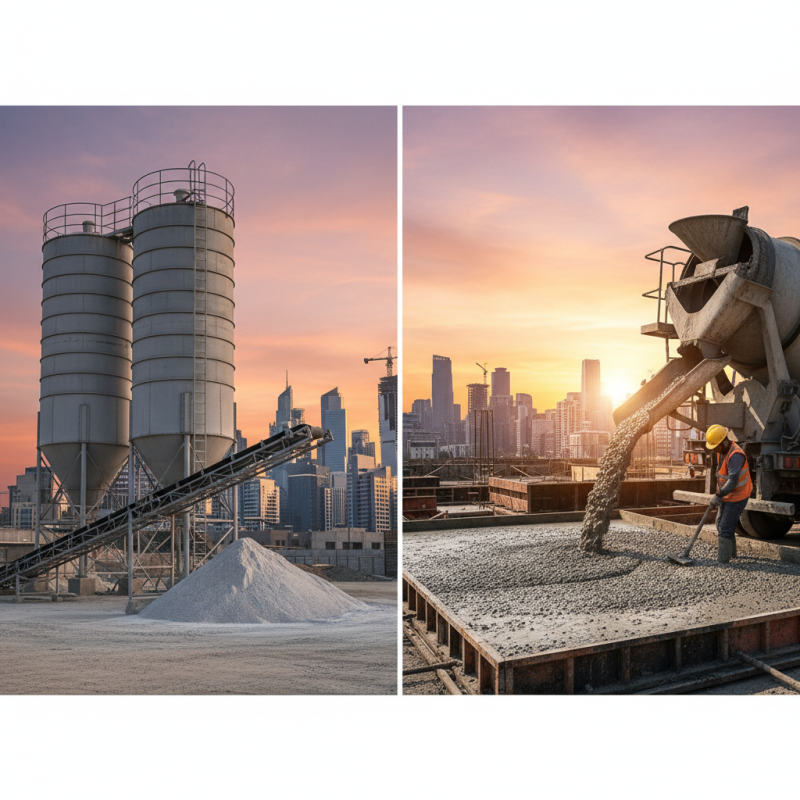
Cement and concrete are integral materials in construction, each with distinct manufacturing processes. Cement is primarily made by heating limestone and clay in a kiln, where the high temperatures facilitate chemical reactions that transform these raw materials into clinker. This clinker is then cooled and ground with a small amount of gypsum to produce the fine powder we recognize as cement. This process is crucial as it determines the quality and composition of the final cement product, which serves as a binding agent when mixed with aggregates and water.
On the other hand, concrete is a composite material that consists of cement, aggregates (such as sand and gravel), and water. The production of concrete entails mixing these components in precise proportions to achieve the desired strength and durability. Once combined, the mixture is poured into molds and allowed to cure, during which time the cement hydrates and binds the aggregates together, resulting in a solid, stone-like material. The fabrication of concrete can be adjusted based on specific applications, varying in ingredients and proportions to suit different structural needs and environmental conditions.
Common Misconceptions About Cement and Concrete
Many people often use the terms "cement" and "concrete" interchangeably, leading to significant misconceptions about their distinct roles in construction. Cement is actually a binding agent, a powdery substance that, when mixed with water and aggregates, chemical compounds react to form a solid structure. This compound is what becomes concrete once it hardens. Thus, while cement is a vital ingredient in concrete, it is not the finished product itself. This confusion can result in misunderstanding the materials needed for various construction projects or repairs.
Another common misconception is regarding the strength and durability of these materials. Some individuals believe that since cement is a strong binder, it can be used alone for construction purposes. In reality, concrete, which includes cement, aggregates, and water, provides the necessary strength and durability required for building foundations, pavements, and other structures. Cement alone lacks the necessary properties to withstand the stresses involved in construction applications. Understanding these differences is crucial for anyone involved in building or renovating structures, as it ensures the use of appropriate materials for the intended purpose.