How to Fast Track Concrete for Quick Construction Solutions?
In the fast-paced realm of construction, the concept of "fast track concrete" has become essential. Building projects often face tight deadlines. Traditional concrete solutions may not suffice in these scenarios. Fast track concrete offers a practical alternative, allowing for quicker setting times and enhanced durability.
Utilizing innovative materials and techniques, fast track concrete reduces overall project duration. This approach ensures that structures can be completed on time without compromising quality. Contractors can meet client demands more effectively, leading to greater satisfaction. However, the implementation of fast track concrete comes with challenges. Proper planning and expertise are crucial to navigate these complexities.
Understanding the dynamics of fast track concrete can enhance construction efficiency. Professionals must weigh the benefits against potential risks. Not every project may suit this approach. The need for thorough evaluation cannot be overstated. Engaging with experienced engineers and suppliers will lead to refined practices and improved outcomes. Balancing speed with reliability is key in modern construction.

Understanding the Importance of Fast-Track Concrete in Construction
Fast-track concrete plays a vital role in modern construction. Rapid setting times allow for quicker project completions. According to a report by the Portland Cement Association, fast-track methods can reduce construction duration by up to 30%. This efficiency translates into significant financial savings and quicker returns on investment.
The use of fast-track concrete also enhances overall project flexibility. Projects often face unexpected delays, whether from weather or supply chain issues. Having the option to accelerate concrete curing can mitigate these risks. However, attention to mixing ratios and additives is essential. Poor execution can lead to cracked structures and longevity issues. Industry experts recommend continuous monitoring of temperature and moisture levels during the curing process.
While fast-track concrete can speed up schedules, the importance of quality cannot be overlooked. Insufficient attention to detail can result in costly fixes later on. It's crucial to balance speed with sound construction practices. Mastering the art of fast-track concrete requires both experience and a robust understanding of material science.
Key Ingredients and Mix Designs for Rapid Setting Concrete
Rapid-setting concrete is essential for quick construction projects. The right mix design can significantly speed up the setting time. Key ingredients play a vital role in this process. Commonly used components include Portland cement, fine aggregates, and water-reducing admixtures. Each element contributes to achieving a fast-track solution.
Fine aggregates improve workability, while the admixtures enhance flow. Adjusting the water-to-cement ratio is crucial for optimal results. A lower ratio increases strength but can complicate mixing. Finding the right balance is often a trial-and-error process. It's easy to overdo the admixtures, leading to unpredictable results.
Moreover, incorporating supplementary cementitious materials, like fly ash or silica fume, can enhance performance. These materials aid in achieving early strength while mitigating shrinkage. However, they require precise management in the mix. Too much can lead to delays instead of speeding up the process. Continuous monitoring and adjusting are essential for successful outcomes.
Techniques for Accelerating Curing Time in Concrete Projects
Accelerating curing time in concrete projects can significantly enhance construction efficiency. Many techniques are available to expedite this process. These methods not only speed up construction timelines but also ensure the concrete achieves the desired strength.
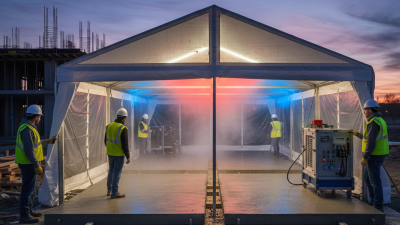
One effective technique is to utilize heaters or heated enclosures. This maintains an optimal temperature for hydration, promoting quicker curing. Another approach is to employ chemical accelerators. These additives can decrease the setting time, allowing for faster project completion. However, one must be cautious about the quantity used, as excessive amounts can compromise the concrete's durability.
Tips: Always monitor the temperature closely when using heat. Too much warmth can lead to cracking. When using accelerators, choose reliable products and follow guidelines. Reducing water content in the mixture might also help. Remember, balancing speed with quality is essential. Quick solutions should not sacrifice the structural integrity of the concrete. Test the strength at intervals to ensure that fast tracking does not result in inferior quality.
How to Fast Track Concrete for Quick Construction Solutions? - Techniques for Accelerating Curing Time in Concrete Projects
| Technique |
Description |
Curing Time Reduction |
Best Usage Conditions |
| Warm Water Mixing |
Using warm water in the mix can accelerate the hydration process of the cement. |
Reduces curing time by up to 25% |
Cold weather conditions |
| Accelerating Additives |
Chemical additives that promote faster curing without compromising strength. |
Reduces curing time by up to 50% |
Moderate temperatures |
| Steam Curing |
Introducing steam into the curing environment to maintain moisture and heat. |
Can cut curing time to as little as 1-2 days |
Ideal for precast concrete |
| Surface Curing Compounds |
Liquid compounds that form a film to retain moisture in the surface layer. |
Improves initial curing time by 30% |
Hot and windy weather |
| Insulated Blankets |
Using insulated blankets to keep the concrete warm during curing. |
Reduces curing duration by 20-30% |
Extremely cold environments |
Innovative Methods and Technologies for Quick Concrete Solutions
Innovative concrete solutions are revolutionizing the construction industry. Advances in material science have led to faster curing times and improved strengths. According to industry reports, rapid set concrete can gain strength significantly faster than traditional mixes. This facilitates quicker project completions, directly impacting cost efficiency and resource management.
Utilizing technologies like 3D printing is a game changer. This method reduces waste and allows for intricate designs with less labor. Moreover, self-healing concrete is emerging as a viable solution. Its ability to mend cracks autonomously minimizes maintenance needs and extends the material's lifespan. Research indicates that such innovative methods can reduce construction time by up to 30%.
**Tip:** Always assess the environmental impact of innovative concrete solutions. Utilizing materials from sustainable sources can improve project sustainability.
Adopting these advanced techniques requires careful planning. Miscalculations can lead to project delays or budget overruns. Investing in training for employees on new technologies is essential for success.
**Tip:** Regularly review project milestones. This ensures that any issues can be addressed before they escalate.
As these methods evolve, the construction industry must adapt. Staying informed on new developments will keep projects efficient and competitive.
Benefits and Challenges of Using Fast-Track Concrete in Construction
Fast-track concrete offers significant benefits for construction projects, making it an attractive option for many builders. Its ability to set and cure quickly means that projects can progress at a rapid pace. This efficiency is crucial in tight timelines, allowing for reduced labor costs and quicker project turnovers. For instance, in bridge constructions or urgent repairs, fast-track concrete can provide the necessary strength without extended waiting periods.
However, there are challenges associated with using fast-track concrete. The mix design requires careful calibration to avoid issues like cracking or poor durability. Inexperience in handling fast-setting materials can lead to significant problems. Furthermore, the need for precise timing in placing and finishing can pressure workers and impact overall quality. While the expedited process is advantageous, it demands a high level of skill and attention to detail to mitigate risks. Achieving the desired results often requires a balance of speed and thoroughness, pushing teams to rethink their established methods.