Mon - Fri 8:00AM - 5:00PM Central
1150 SE Hamblen Rd, Lee's Summit, MO 64081
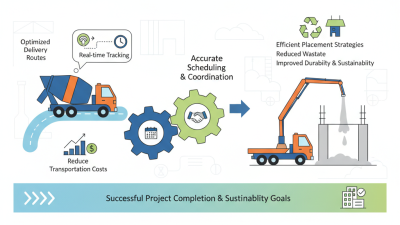
Global concrete procurement is rarely delayed by one dramatic failure. It slows through small gaps: unclear specifications, late approvals, missing test certificates, and trucks waiting at crowded sites. A fast track concrete strategy closes these gaps before production begins. It connects designers, batching plants, laboratories, haulers, and site managers through one practical procurement plan.
Ken Simonson, Chief Economist at The Associated General Contractors of America, has often highlighted the construction industry’s exposure to supply-chain uncertainty. His warning is useful here: “Construction projects depend on reliable materials, reliable workers, and reliable schedules.” That principle makes fast track concrete more than an urgent purchase. It becomes a controlled process.
Speed needs evidence.
An experienced procurement team confirms strength class, slump range, aggregate type, cement availability, admixture compatibility, delivery radius, and curing conditions. It also checks backup suppliers before the first pour. A plant may promise 200 cubic metres daily, yet local traffic, weather, or maintenance can reduce that capacity quickly. Site teams should test trial mixes, review batch records, and agree on rejection procedures before dispatch.
Global sourcing adds another layer. Product names, measurement units, quality documents, and approval practices may differ between countries. Translation errors can become expensive cracks. Digital order tracking helps, but it cannot replace a competent local inspection. That is an uncomfortable truth.
The best fast track concrete programs are not always the fastest on paper. They are the ones that protect quality while reducing avoidable waiting. Some plans will still need revision. That is not weakness; it is responsible procurement. A clear risk register, realistic lead time, and documented communication trail give international buyers stronger control from quotation to final placement.

Global concrete procurement begins with a clear definition of project requirements, not a quick request for prices. Specify strength class, exposure conditions, slump, setting time, aggregate size, and required service life. State the testing method and acceptance criteria for every critical property. A bridge deck in a cold region may need freeze-thaw resistance, while a coastal foundation may require strong chloride protection. Local climate changes the mix.
Site conditions also shape procurement decisions. Record access limits, placement rates, pumping distances, storage space, and expected delivery windows. A remote project may need backup batching capacity and longer quality-control procedures. Confirm whether local materials meet the project standard before approving substitutions. One overlooked detail can delay an entire pour.
Documentation must travel with the concrete. Request mix designs, material certificates, laboratory results, calibration records, and batch delivery tickets. Independent testing can verify performance when suppliers operate across different countries. Compare requirements against applicable national standards, contract clauses, and environmental rules. Legal compliance is not optional.
Experience shows that vague wording creates expensive disputes. Our earlier specifications were sometimes technically correct but difficult to measure on site. That weakness taught us to define who tests, when samples are taken, and what happens after a failed result. Keep requirements practical, auditable, and adaptable. Perfect specifications rarely exist. Clear accountability matters more.
How to Fast Track Concrete Procurement Globally?
Selecting a qualified international concrete supplier starts with technical evidence, not a polished website. The Global Cement and Concrete Association reports that the world uses about 14 billion cubic metres of concrete annually. That scale increases pressure on quality, capacity, and delivery control. Ask each supplier for recent compressive-strength results, mix designs, aggregate sources, production capacity, and traceability records. A valid ISO 9001 certificate helps. It does not prove concrete performance.
Check compliance against the project’s required standards, such as EN 206 or ASTM C94. Request independent laboratory reports, calibration records, and batch tickets from comparable projects. Look for details: cement content, water-cement ratio, admixture dosage, curing conditions, and test age. The United States Geological Survey estimated global cement production at 4.1 billion tonnes in 2023. Yet high production volume does not guarantee consistent quality. I would not confuse scale with reliability.
Logistics deserve equal scrutiny. Confirm export documentation, port experience, packaging, storage conditions, insurance, and backup production sites. The World Bank’s 2023 Logistics Performance Index shows that international supply chains remain sensitive to customs, infrastructure, and shipment timing. Require a realistic lead-time schedule, including laboratory approval and local testing. Conduct a video or physical audit where possible. One weakness remains: supplier documents can look complete while site controls are inconsistent. A small trial order may reveal more than a large presentation.
Suggested qualification weights for international concrete suppliers. Prioritize compliance with recognized concrete standards, verified testing, traceability, logistics readiness, and commercial resilience before requesting final quotations.
How to Fast Track Concrete Procurement Globally?
Concrete procurement starts with comparable data, not a low headline price. Delivered cost should include cement content, aggregates, admixtures, testing, pumping, insurance, and inland freight. The Global Cement and Concrete Association reports that roughly 14 billion cubic metres of concrete are produced annually. That scale hides major regional differences. Prices deceive. A port-based quotation may look attractive until customs clearance and final-site transport are added.
Standards must be checked before requesting bids. EN 206 and ASTM C94 address different requirements for concrete production, testing, delivery, and conformity. A mix approved in one market may need new trials elsewhere. The International Energy Agency estimates cement production created about 2.5 gigatonnes of direct CO2 emissions in 2022. Therefore, buyers should request verified cement content and environmental data, not vague “green” claims. I would also require batch records, curing evidence, and independent test results.
Lead time is more than mixing capacity. It includes aggregate availability, laboratory approval, truck allocation, border procedures, and weather. The UNCTAD Review of Maritime Transport 2024 describes continuing disruption, rerouting, and freight uncertainty across major shipping lanes. Turner & Townsend’s International Construction Market Survey 2024 also records persistent cost pressure and labor constraints in construction markets. Build two approved supply routes where practical. Keep a small schedule buffer. Our early estimates are often too neat. A practical tender should compare delivery windows, failure penalties, backup capacity, and the cost of rejected loads.
Fast-track concrete procurement globally requires more than accepting a low quote. Contracts should define grade, slump, strength, test methods, delivery windows, and responsibility for rejected loads. I have found that vague terms create delays at both the batching plant and jobsite. A practical contract also states currency, insurance, inspection rights, dispute procedures, and acceptable substitutes. Keep the language clear. A short annex can list approved mix designs and local documentation requirements.
Logistics planning starts with the pour, not the purchase order. Confirm plant capacity, truck cycles, border documents, weather risks, and site access before dispatch. For overseas projects, map every handoff and assign one accountable coordinator. Temperature records and calibrated delivery tickets provide useful evidence. If a truck arrives late, the team needs a documented decision: hold, test, or reject. Speed matters, but rushed unloading can damage quality.
Quality control should combine source checks, batch sampling, slump testing, cube or cylinder testing, and traceable records. Independent laboratories may strengthen confidence when specifications cross jurisdictions. Compliance teams should verify permits, worker protections, environmental duties, import rules, and sanctions screening. Requirements differ widely. That is the difficult part. Digital records help, yet they are not automatically accurate. I once treated a supplier certificate as complete; a missing test date later forced a recheck. Build review points into the schedule, and allow time for corrective action.
Fast-tracking concrete procurement globally requires more than finding a lower price. It requires evidence from every shipment, plant, and site. Teams should record quote response time, approved mix changes, batch consistency, delivery accuracy, and landed cost. A shared dashboard can expose delays within hours. For example, a delivery arriving 90 minutes late may affect pump scheduling and labor costs. We track that event against weather, traffic, loading time, and dispatch records. Small details matter.
Performance reviews should happen weekly during active pours and monthly across suppliers. Use the same measures in every region, while allowing local safety and quality requirements. A practical scorecard might weight on-time delivery, test-result reliability, documentation completeness, and issue-resolution speed. Engineers should verify records against cylinder tests, batch tickets, and site observations. Numbers alone can mislead. A supplier may appear efficient because incomplete failures were never logged.
The next procurement cycle should turn these findings into specific actions. Adjust order windows when loading data shows recurring congestion. Keep a qualified backup source for critical projects. Rewrite specifications when repeated clarification requests reveal ambiguity. We also need to admit weak assumptions. In one cycle, our forecast ignored weekend restrictions and created avoidable idle time. That mistake deserved a process change, not an excuse. After each project, preserve the evidence, assign owners, and check whether the promised improvement actually occurred.