What is Liquid Epoxy for Concrete and How Does It Work?
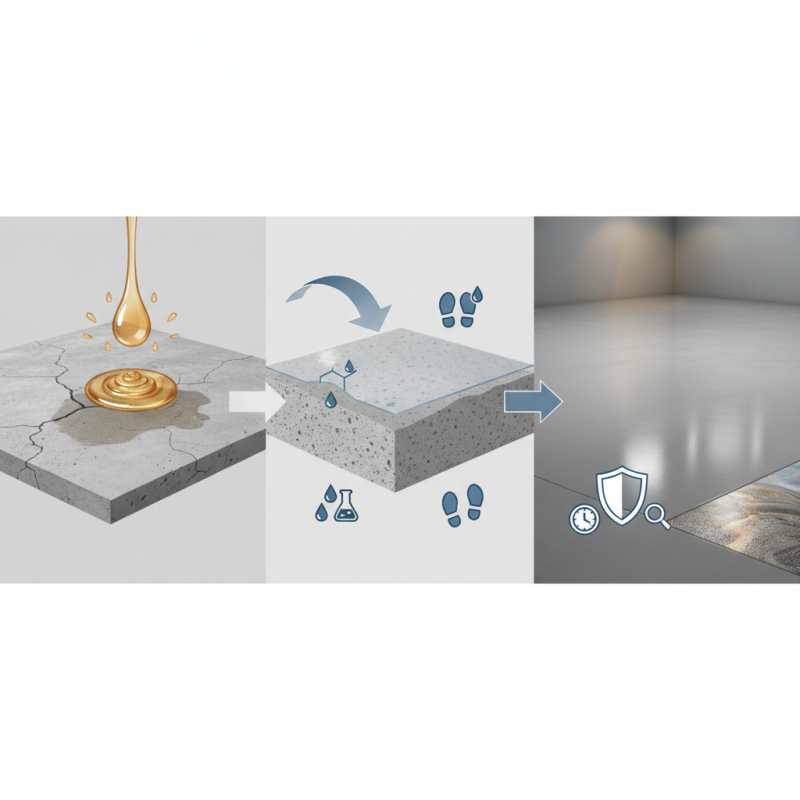
Liquid epoxy for concrete has emerged as a revolutionary solution for enhancing the durability and aesthetics of concrete surfaces. This advanced material is formulated to provide a robust protective layer, making it an ideal choice for both industrial and residential applications. Unlike traditional sealants, liquid epoxy creates a strong chemical bond with the concrete, leading to superior adhesion and resilience against environmental factors such as moisture, chemicals, and heavy foot traffic.
The application process of liquid epoxy for concrete involves a meticulous preparation of the surface to ensure maximum effectiveness. Once applied, it cures to form a solid, glossy finish that not only elevates the visual appeal but also significantly prolongs the lifespan of the concrete beneath. Additionally, its versatility allows for a range of finishes and textures, making it suitable for various settings, from garages and basements to commercial spaces and decorative overlays. By understanding the properties and benefits of liquid epoxy for concrete, homeowners and contractors alike can make informed decisions to enhance the functionality and beauty of their concrete surfaces.
What is Liquid Epoxy and Its Composition for Concrete Applications?
Liquid epoxy is a versatile resin system widely used in concrete applications due to its excellent adhesion, durability, and chemical resistance. Composed primarily of epoxy resins and hardeners, its formulation can vary depending on the intended use. Typically, the resins are derived from petrochemical sources and contain reactive functional groups, which enable them to bond effectively to concrete surfaces. The hardener, often an amine or an acid anhydride, initiates the curing process, transforming the liquid resin into a solid, robust material.
When applying liquid epoxy to concrete, it serves multiple functions, such as enhancing surface integrity, providing a protective barrier against moisture, and improving aesthetic appeal. The material’s ability to form chemical bonds with both concrete and itself allows it to fill in cracks and defects, thus reinforcing the structure. It’s particularly beneficial in environments exposed to heavy traffic, chemicals, or extreme temperatures.
Tips for using liquid epoxy include ensuring the surface is clean and dry before application, as contaminants can hinder adhesion. Additionally, applying the epoxy at the recommended temperature conditions can prevent curing issues and maximize performance. Always prepare enough product for the area to be covered, as working with epoxy requires a precise mix to maintain its effectiveness.
What is Liquid Epoxy for Concrete and How Does It Work?
| Property |
Description |
| Composition |
Liquid epoxy is primarily composed of epoxy resins, hardeners, and additives. |
| Curing Process |
The curing process involves a chemical reaction between the resin and hardener, leading to a solid, durable surface. |
| Benefits |
Provides high chemical resistance, excellent adhesion, and a waterproof finish. |
| Uses |
Commonly used for flooring, coatings, and repair applications in concrete structures. |
| Application Methods |
Can be applied with brushes, rollers, or by pouring, depending on the area of coverage. |
| Setting Time |
Initial setting time typically ranges from 30 minutes to several hours, depending on the formulation. |
The Benefits of Using Liquid Epoxy in Concrete Projects
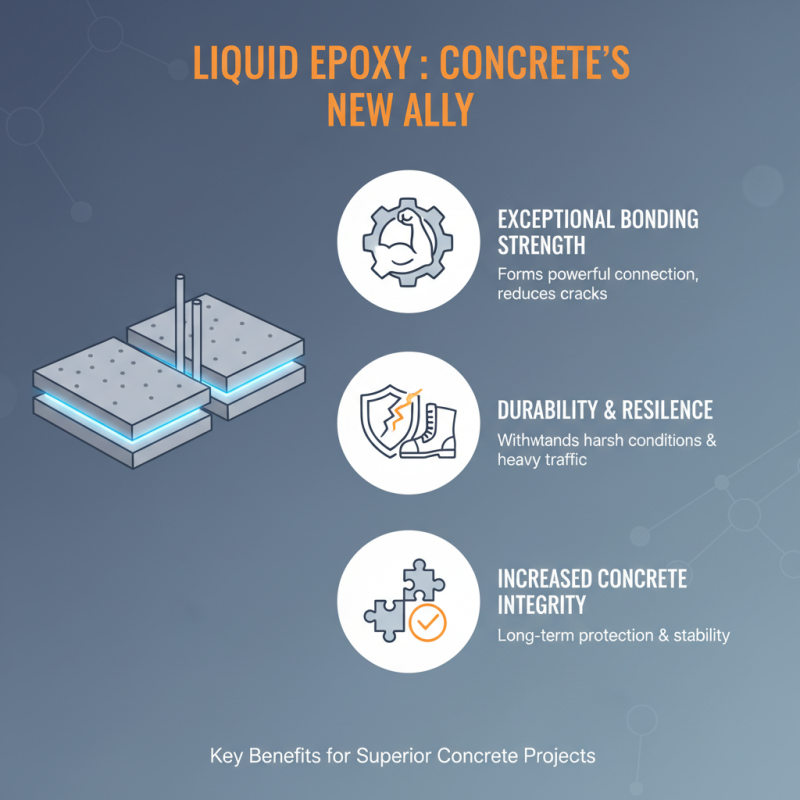
Liquid epoxy is increasingly becoming a favored choice in concrete projects due to its numerous benefits. One of the primary advantages of using liquid epoxy is its exceptional bonding strength. This high-performance adhesive creates a strong connection between concrete surfaces, reducing the likelihood of cracks and damage. This is particularly beneficial in environments subject to harsh conditions or heavy traffic, as the resilience of liquid epoxy helps maintain the integrity of the concrete over time.
Another significant benefit is the versatility of liquid epoxy. It can be applied in various applications, including flooring, repair, and protective coatings. Liquid epoxy not only enhances the overall durability of concrete surfaces but also improves aesthetics. It can be tinted or colored to achieve the desired finish, allowing for creative freedom in design. Additionally, the smooth, glossy finish of epoxy-coated surfaces makes them easier to clean and maintain, which can be a major advantage in both residential and commercial settings.
How Liquid Epoxy Adheres to Concrete Surfaces
Liquid epoxy is a versatile material used to enhance the durability and aesthetics of concrete surfaces. The effectiveness of liquid epoxy's adhesion to concrete is primarily due to its chemical composition. When applied, liquid epoxy undergoes a reaction that promotes a molecular bond with the concrete substrate. This bond is further enhanced by the epoxy's ability to seep into the tiny pores and fissures in the concrete, creating a mechanical interlock that solidifies as the epoxy cures.
According to industry reports, epoxy coatings can significantly improve the longevity of concrete by resisting moisture, chemicals, and abrasion. Data indicates that concrete treated with liquid epoxy can last up to three times longer than untreated concrete under similar conditions. Additionally, surfaces bonded with liquid epoxy exhibit a tensile strength that can exceed 5,000 psi, allowing them to withstand heavy traffic and loads. These properties make liquid epoxy not just an aesthetic choice but a functional one, as it turns concrete surfaces into resilient materials suitable for both industrial and residential applications.
Moreover, the adhesion process is aided by the use of primers tailored for concrete, which enhances the surface's roughness and promotes better bonding. The application of liquid epoxy in a controlled environment, typically with proper temperature and humidity considerations, further ensures optimal adhesion. As the epoxy cures, it forms a seamless layer that not only protects but also aesthetically enhances the concrete beneath, making it a preferred choice among construction professionals.
Adhesion Strength of Liquid Epoxy on Concrete
Application Techniques for Liquid Epoxy on Concrete
Liquid epoxy is a versatile material widely used for enhancing the durability and appearance of concrete surfaces. Its application techniques vary and largely depend on the specific project requirements. One of the most effective techniques involves surface preparation, which includes cleaning, grinding, and repairing any cracks to ensure optimal adhesion. According to industry reports, a properly prepared surface can increase the longevity of epoxy coatings by up to 50%, ensuring that they withstand heavy traffic and harsh conditions.
When applying liquid epoxy, it is crucial to consider environmental factors such as temperature and humidity. The ideal temperature range for application is typically between 60°F and 90°F to allow for proper curing. It’s recommended to use a roller or squeegee for an even application, ensuring that the epoxy fills all pores and imperfections in the concrete surface. For best results, consider applying a primer specifically designed for epoxy systems; this can enhance bonding and improve overall performance.
Tips: Always conduct a small patch test to check for compatibility with the concrete and to ensure the desired finish is achieved. Additionally, using a recoat window, generally around 24 hours, can eliminate the risk of improper bonding for multiple layers, providing an additional layer of protection tailored to your specific needs.
Curing Process and Maintenance of Liquid Epoxy in Concrete Uses
The curing process of liquid epoxy for concrete is a crucial factor in determining the durability and effectiveness of the final surface. Generally, epoxy cures through a chemical reaction between the resin and hardener, which typically takes about 24 to 48 hours for initial hardening. However, for optimal strength, a full cure can take up to seven days, depending on environmental conditions such as temperature and humidity. According to the American Concrete Institute, curing concrete to achieve a compressive strength of at least 25 MPa should involve maintaining adequate moisture for at least 7 days, which is equally applicable to epoxy systems.
Maintenance of liquid epoxy surfaces is essential to maximize their lifespan. Regular cleaning with pH-neutral cleansers can help prevent the buildup of contaminants that could undermine the bond strength. Furthermore, industry reports suggest that the life expectancy of epoxy coatings can exceed 10 years when properly maintained, provided that surface preparation before application is meticulously adhered to. It is also advisable to conduct periodic inspections to identify and address wear or damage early. Following these guidelines ensures the integrity and performance of liquid epoxy in concrete applications, ultimately resulting in cost-effective and resilient flooring solutions.