Mon - Fri 8:00AM - 5:00PM Central
1150 SE Hamblen Rd, Lee's Summit, MO 64081
Aluminum Clad Windows combine a durable exterior with an interior that can retain the warmth of wood. Their performance, however, depends on more than appearance. Cladding quality, frame construction, drainage details, and glazing all affect comfort and service life. Details matter.
This guide introduces leading manufacturers worldwide and the differences buyers may notice across their product lines. It considers material choices, thermal performance, design options, customization, warranties, and regional availability. A carefully finished corner or well-designed sill can reveal more about a window than a glossy showroom image. Still, published specifications do not tell the whole story.
Manufacturer comparisons should be treated as a starting point, not a universal ranking. A product suited to a cold, dry climate may not be the best choice for a coastal home exposed to wind-driven rain. Installation quality matters, too. Even a well-engineered unit can underperform when openings are measured poorly or water-management details are overlooked. Ask for current technical documents, tested performance data, and clear warranty terms. Where possible, inspect a sample or completed installation. There is no effortless shortcut here.
The sections that follow outline what distinguishes major suppliers and which questions help narrow a shortlist. They also recognize a practical limitation: product ranges, specifications, and distribution can change by market. Compare the exact model available for your project, rather than relying on a brand name alone.
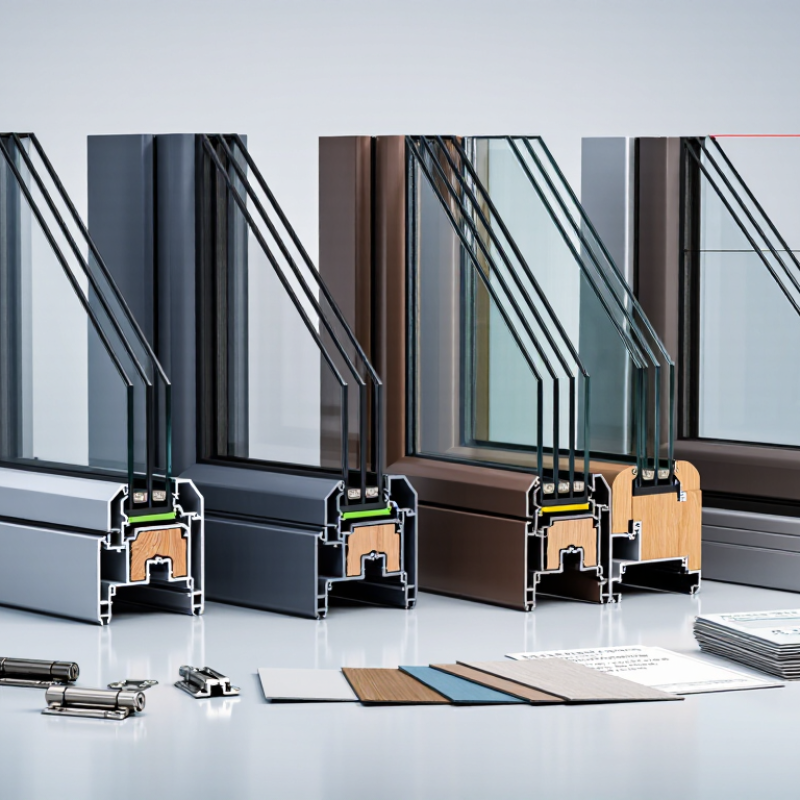
Aluminum-clad windows combine an exterior aluminum shell with an interior frame, often made from wood or another insulating material. The aluminum faces weather and sun, while the inner frame helps limit heat transfer and shapes the room-facing finish. Small details matter. A continuous thermal break can reduce conduction through the metal, but poor installation may still leave cold spots around the opening.
Construction varies by system. The cladding may be mechanically attached or integrated with the frame, and joints need to shed water rather than trap it. Look for sloped sill details, clear drainage paths, and sealed corners. These features are easy to overlook on a showroom sample. On site, flashing and careful air sealing connect the window to the wall assembly, where many performance problems begin.
Glazing and frame ratings also deserve attention. The U.S. Department of Energy estimates that windows account for about 25–30% of residential heating and cooling energy use; actual losses depend on climate, building design, and installation.
The National Fenestration Rating Council rates products for factors such as U-factor and solar heat gain coefficient, helping buyers compare tested performance. A strong rating is useful, but it is not a guarantee of comfort in every room.
Check the local climate needs, glass specification, frame depth, and installation instructions together. And inspect the corners. That is where workmanship can disappoint.
Evaluating aluminum-clad window manufacturers starts with the actual construction, not the showroom finish. Ask what lies beneath the aluminum: wood, composite material, or another substrate. Request a cross-section showing drainage paths, seals, and any thermal breaks. A small sample can reveal rough joints or thin coatings that a brochure will not.
Ask for test reports covering air leakage, water penetration, and structural performance. Check that the tested configuration matches your proposed sizes and opening styles. Details matter. A fixed unit and a large operating sash may perform differently. Compare finish options under direct light, and ask how the coating is maintained near salt air or strong sun. Ask for evidence.
Review lead times, quality checks, replacement-part availability, and warranty exclusions in writing. Then talk with recent customers or installers about fit, delivery condition, and support after installation. Their feedback may expose problems that formal documents miss. One point worth questioning: a long warranty sounds reassuring, but it matters little if coverage is narrow or service is difficult to access. Compare practical support, not just headline promises. No single test tells the whole story, and even a careful evaluation cannot prevent every installation issue.
Across global markets, leading aluminum-clad window manufacturers are shaped by climate, building traditions, and supply networks. In colder regions, buyers often prioritize tight seals and effective thermal breaks. Coastal projects may need durable finishes and hardware that tolerate salty air. A manufacturer serving several markets must balance these needs without turning every window into a custom engineering project. That balance is difficult. Product catalogs can look similar, but frame depth, glazing options, drainage paths, and service support vary. Ask how a system performs in the conditions where it will be installed, not only how it looks in a showroom.
Experienced specifiers compare verified performance data with practical details: available sizes, lead times, replacement parts, and installation guidance. They also check whether test results apply to the exact frame and glass combination being quoted. Regional production can shorten delivery routes, while broad distribution may offer more design choices; neither advantage is automatic. Request written specifications and clarify who handles site questions after delivery. A polished sample-room meeting does not guarantee an easy installation. There is uncertainty. Published ratings cannot capture every opening, crew, or weather event. The strongest choice is usually the manufacturer whose documentation, product range, and local technical support fit the project—not simply the one with the widest global reach.
Aluminum-clad windows pair a durable exterior with a warmer interior, but the details vary widely. Compare frame depth, corner construction, drainage paths, and finish quality—not just the material list. A deep sill can change the room’s appearance, while a poorly detailed joint may invite drafts or water. Details matter.
Performance data helps separate measurable claims from showroom language. The U.S. Department of Energy’s Energy Saver guidance estimates that windows account for 25–30% of residential heating and cooling energy use. That range is not a product guarantee: climate, glazing area, installation, and occupant behavior all affect results. Check National Fenestration Rating Council labels for U-factor and solar heat gain coefficient, then compare air leakage and water-penetration ratings tested under recognized industry standards. Test the whole unit.
Customization is more than color. Ask whether manufacturers can accommodate unusual opening sizes, divided-light patterns, hardware choices, and matching interior finishes without changing tested performance. Request drawings, sample corners, and written specifications before ordering. A slim frame may maximize glass area, yet provide less room for reinforcement; the trade-off deserves a clear explanation. I would not assume a custom option performs like the standard model. Confirm the exact configuration, installation requirements, and warranty terms in writing.
An aluminum-clad window is only as dependable as its design, fabrication, and installation support. Start with the project conditions: climate exposure, building height, opening sizes, and energy targets. Ask manufacturers for performance data that matches the proposed frame and glass combination, not a generic product sheet. Look closely at drainage paths, corner joints, and the connection between the exterior cladding and interior frame. A clear answer matters.
Ask how the manufacturer verifies air and water performance, and whether test results apply to the sizes and configurations you need. Review sample drawings, finish options, and hardware details before approving production. Check how replacement parts are sourced and how technical questions are handled after delivery. If possible, inspect a full-size sample. Small details show up there.
Then examine lead times, quality-control records, warranty terms, and installation guidance. Confirm who coordinates field measurements and resolves fit issues. Ask for references from projects with similar exposure and window dimensions. Do not choose on price alone; compare the scope behind each quote. The cheapest bid may exclude important accessories or support. One detail is easy to underestimate: even a well-made frame can perform poorly if site installation is rushed. Allow time for review, and keep written decisions with the project file.
| Evaluation Dimension | What to Verify | Useful Data or Standards | How to Compare Manufacturers |
|---|---|---|---|
| Product construction | Confirm that the product has a wood interior and an exterior aluminum cladding, and review how the cladding is attached, drained, and finished. | Request section drawings, material specifications, finish options, and details for corners, joints, and drainage paths. | Compare the complete assembly rather than judging by the phrase “aluminum-clad” alone. Check that the proposed construction suits the project’s exposure and maintenance requirements. |
| Thermal performance | Review whole-window U-factor and solar heat gain coefficient (SHGC) for the specified size, glazing, spacer, and frame configuration. | In North America, NFRC-certified ratings provide a standardized basis for comparing labeled products. Lower U-factor means less heat transfer; suitable SHGC depends on climate, orientation, and shading. | Compare like-for-like configurations and use whole-window values, not center-of-glass figures. Confirm that the tested size and glazing match the project specification. |
| Air leakage | Ask for air-leakage results for the exact operating style and tested assembly. | North American ratings commonly report air leakage under AAMA/WDMA/CSA 101/I.S.2/A440 or related test methods. European products may use EN 12207 air-permeability classifications. | Lower reported leakage generally indicates a tighter window, but test methods and units can differ. Compare results only when the method, size, and product type are comparable. |
| Water penetration and wind resistance | Check the tested water-pressure and structural-pressure performance, including any limits for size, configuration, and installation. | European classification systems include EN 12208 for watertightness and EN 12210 for resistance to wind load. North American specifications may use performance grades under AAMA/WDMA/CSA 101/I.S.2/A440. | Match the required performance to the site’s wind exposure, building height, and weather conditions. Confirm that the tested configuration represents the units being ordered. |
| Applicable market certifications | Verify that documentation is valid for the destination market and covers the specified product family and configuration. | Examples include NFRC ratings for North American energy performance, AAMA/WDMA/CSA product certification in North America, and CE marking with applicable declarations for products placed on the European market. | Request current certificates and test reports, then check their scope, dates, and issuing bodies. A certificate for one product or market does not automatically cover every configuration or jurisdiction. |
| Customization and project capacity | Confirm available opening styles, dimensions, glazing options, finishes, hardware, and the manufacturer’s ability to supply the required quantities. | Request approved shop drawings, a written schedule of sizes and finishes, stated production lead times, and confirmation of any project-specific testing or engineering. | Evaluate whether the manufacturer can document and deliver the complete project specification—not just a standard catalog unit. |
| Installation support | Review installation instructions, perimeter-sealing details, flashing guidance, and availability of technical assistance. | Request installation manuals, project-specific interface details, and written guidance for integrating the window with the wall assembly. | Clarify who is responsible for field measurements, installation, and coordination with the building envelope. Product performance depends on correct installation as well as factory testing. |
| Warranty and after-sales service | Read the warranty terms for wood, aluminum finish, glass, hardware, and labor separately. | Check coverage period, geographic limits, maintenance obligations, exclusions, claim process, and availability of replacement parts. | Compare the written terms rather than relying on a single headline warranty length. Confirm who will handle service in the project’s location. |
| Cost and lifecycle value | Compare the supplied scope, including glazing, hardware, finishes, packaging, delivery, installation, and service. | Use comparable quotations with the same sizes, performance targets, accessories, and delivery terms. Consider expected maintenance and replacement-part availability. | Evaluate total project cost and documented performance together; the lowest initial quotation may not include equivalent specifications or support. |
Ratings and certification requirements vary by country, product configuration, and project specification. Confirm applicable local codes and request current documentation for the exact window assembly being considered.
