China Top 10 EPS Casting Pattern Mould Manufacturers
China has become a major source of Eps Casting Pattern Mould solutions for foundries, automotive suppliers, and industrial equipment manufacturers. This guide introduces ten notable Chinese manufacturers serving these demanding applications. Their capabilities may include pattern design, CNC machining, foam processing, tooling development, and export support.
A reliable manufacturer should offer more than attractive pricing. Practical evaluation should examine dimensional accuracy, foam density control, mould surface quality, production consistency, and documented inspection procedures. Clear drawings, stable lead times, and responsive engineering communication also matter. In a real workshop, small details become visible quickly: uneven bead expansion, rough cavity edges, or a pattern that needs repeated trimming can affect casting results.
Supplier experience deserves careful attention. Companies with automotive, pump, valve, or heavy machinery projects may understand different pattern requirements. Certifications can support credibility, but certificates alone cannot prove daily performance. Sample approvals, factory audits, customer references, and measurable tolerance records provide stronger evidence.
This ranking should not be treated as permanent. Manufacturing capacity, equipment, staff, and service quality can change. Some suppliers may excel at complex prototypes but struggle with large-volume orders. Others may produce efficiently yet communicate slowly across time zones. Those limitations deserve honest consideration.
The following overview compares each manufacturer through production technology, customization ability, quality management, industry experience, delivery performance, and international service. Buyers can use these points to request drawings, verify samples, and select an EPS Casting Pattern Mould partner with clearer expectations. Reliability is built through evidence. Not promises.
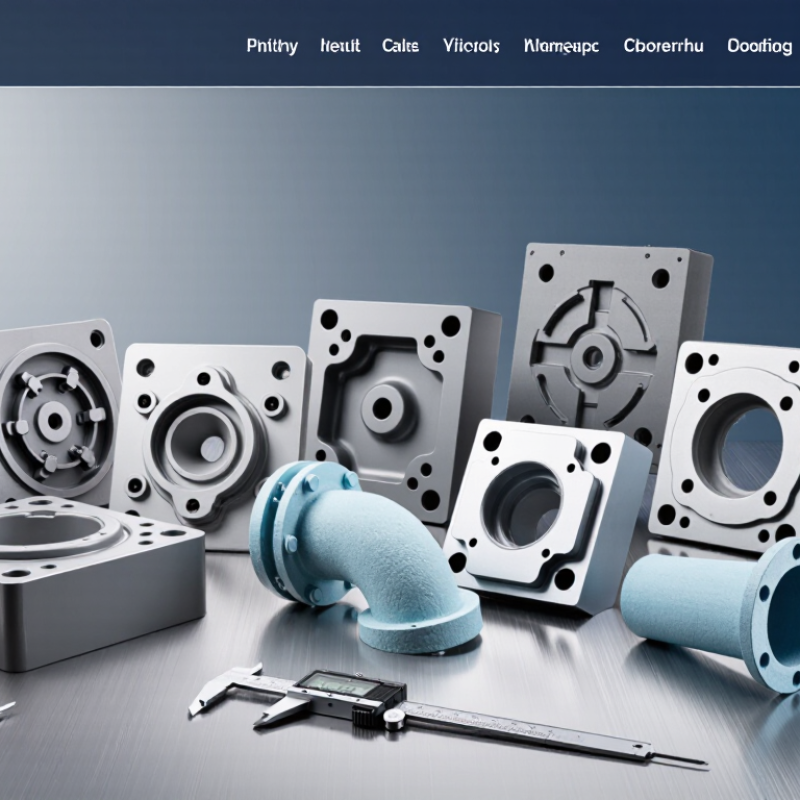
EPS Casting Pattern Moulds: Process, Materials, and 16–30 kg/m³ Density
China Top 10 EPS Casting Pattern Mould Manufacturers
EPS casting pattern moulds support the lost foam process by creating accurate, disposable patterns. The process begins with expandable polystyrene beads. Steam expands them inside a metal mould. After cooling, the beads need controlled aging before final moulding.
This step is easy to underestimate. Uneven aging can cause weak corners or dimensional changes.
Density usually ranges from 16 to 30 kg/m³. Lower densities reduce material use and improve gas evacuation. However, very light patterns may crush during handling.
Higher densities create stronger surfaces and finer details, but they require careful coating and venting. The practical choice depends on casting size, metal temperature, wall thickness, and required surface quality.
Common pattern mould materials include machined aluminium and durable tooling alloys. Aluminium offers fast heat transfer and repeatable dimensions.
Tips:
Check bead expansion, mould temperature, and pattern weight regularly. Use a uniform refractory coating, then dry it fully before pouring. Inspect vents and parting lines for blocked areas.
A rushed drying cycle may look acceptable, yet produce defects later. Operators should record density and shrinkage results for every trial.
Even experienced teams sometimes adjust the mould after the first casting. That feedback matters. Reliable manufacturers combine measured process control with hands-on inspection, rather than trusting design files alone.
How China’s Top 10 EPS Mould Manufacturers Are Selected and Ranked
China’s top EPS casting pattern mould manufacturers are selected through evidence, not advertising claims. The ranking examines factory experience, mould design capability, material control, and production consistency. Auditors review sample moulds, machining records, dimensional reports, and customer feedback. Practical experience matters.
Technical scoring includes CNC accuracy, bead flow, ventilation design, surface finish, and release performance. Inspectors also assess tooling strength, replacement-part support, lead times, and communication during revisions. Reliable manufacturers explain tolerances clearly and provide measurable inspection data. Certifications help, but they cannot replace physical testing. A promising factory may still perform poorly on complex shapes or urgent orders.
Tips: Request a trial mould before placing a large order. Compare cavity dimensions, weight, surface marks, and demoulding results. Ask for photos of current production, not only showroom samples. Check whether engineering staff can identify shrinkage risks and suggest corrections. Pricing should be reviewed with tooling life and maintenance costs. The lowest quote can become expensive later. Rankings remain imperfect because buyer requirements differ, and public information is sometimes incomplete. A manufacturer serving simple packaging may not suit automotive or architectural patterns. For this reason, the final position combines verified evidence, application fit, responsiveness, and observed production results rather than a single score.
Manufacturer Profiles: CNC Machining, Tooling Capacity, and Export Markets
China Top 10 EPS Casting Pattern Mould Manufacturers
Evaluating China’s top EPS casting pattern mould manufacturers requires more than comparing prices. CNC machining accuracy, tooling depth, inspection systems, and export experience reveal production reliability. Grand View Research estimated the global EPS market at about USD 10.6 billion in 2023, with growth expected through 2030. That demand increases pressure on mould suppliers to shorten lead times and control dimensional variation.
Strong manufacturers typically operate multi-axis CNC machines, coordinate measuring machines, and dedicated aluminium tooling cells. Practical capacity matters. A supplier may advertise dozens of machining centres, yet still outsource complex inserts or large mould bases.
Ask for equipment lists, tolerances, sample inspection reports, and documented maintenance records. Small details matter. Cooling channels should be checked carefully.
Export markets also show operational maturity. Suppliers serving Europe, North America, Southeast Asia, and the Middle East usually understand packaging standards, technical drawings, customs documents, and regional safety expectations. UN Comtrade data consistently identifies machinery and manufacturing equipment as major traded product categories between China and global markets, supporting the importance of export-ready processes.
However, market coverage alone proves little. Some profiles list destinations without showing repeat orders or installation support. That weakness deserves attention. A realistic shortlist should compare CNC capability, tooling steel or aluminium selection, trial-mould performance, correction policies, and after-sales response times. The ranking may still be imperfect, because public supplier data is often incomplete and difficult to verify independently.
Quality Benchmarks: ±0.1 mm Accuracy, Venting, and Surface Finish
China Top 10 EPS Casting Pattern Mould Manufacturers
When comparing China’s top ten EPS casting pattern mould manufacturers, accuracy deserves close attention. A reliable mould should maintain dimensional tolerance near ±0.1 mm across critical sections. This benchmark affects assembly, casting stability, and final surface quality. Experienced buyers should request coordinate measuring machine reports, not only inspection photographs. Check measuring conditions, reference points, and inspection frequency. Small errors accumulate. In practice, sharp corners and deep cavities often create greater variation than flat panels.
Venting also separates a dependable mould from an attractive sample. Properly positioned vents help gases escape during casting and reduce burning, back pressure, and incomplete filling. Vent holes should remain clean after repeated use. Surface finish needs equal scrutiny. Smooth machining can reduce pattern defects, while rough areas may transfer unwanted texture to the casting. Ask for samples from corners, ribs, and repaired sections. These areas reveal workmanship more honestly. A mould can pass one inspection and still perform poorly after production cycles. That is a limitation worth admitting. Regular dimensional checks, cleaning records, and controlled storage provide stronger evidence of long-term reliability. Manufacturers with documented process controls are easier to evaluate, even when their first sample looks ordinary.
