Top 10 Festo Pneumatic Cylinder Suppliers Worldwide
The global demand for automation is reshaping how buyers evaluate pneumatic components. The International Federation of Robotics reported 541,302 industrial robots installed worldwide in 2023. That figure signals continuing investment in fast, repeatable production systems. Pneumatic cylinders remain important in packaging, assembly, material handling, and food-processing equipment.
A Festo Pneumatic Cylinder must do more than extend and retract. It should deliver stable force, accurate stroke control, long service life, and simple maintenance. Grand View Research identifies factory automation and industrial machinery as major growth areas for the pneumatic cylinder market. MarketsandMarkets also highlights energy efficiency, compact designs, and connected manufacturing as important industry trends. The numbers are useful, but they do not tell the whole story.
“Pneumatics is not dead; it is alive and kicking,” says Dr. Peter Post, a Festo technology expert, reflecting the technology’s continuing industrial relevance. Still, that statement needs testing against real operating conditions. A cylinder that performs well in a clean laboratory may struggle beside oil mist, vibration, or frequent washdowns. Supplier quality varies. Product pages can hide lead times, seal limitations, and regional service gaps.
This Top 10 Festo Pneumatic Cylinder Suppliers Worldwide guide compares manufacturers through practical criteria. These include product compatibility, engineering support, certifications, delivery capability, lifecycle value, and customer experience. No ranking is flawless. Application data, local availability, and maintenance history should influence the final decision.
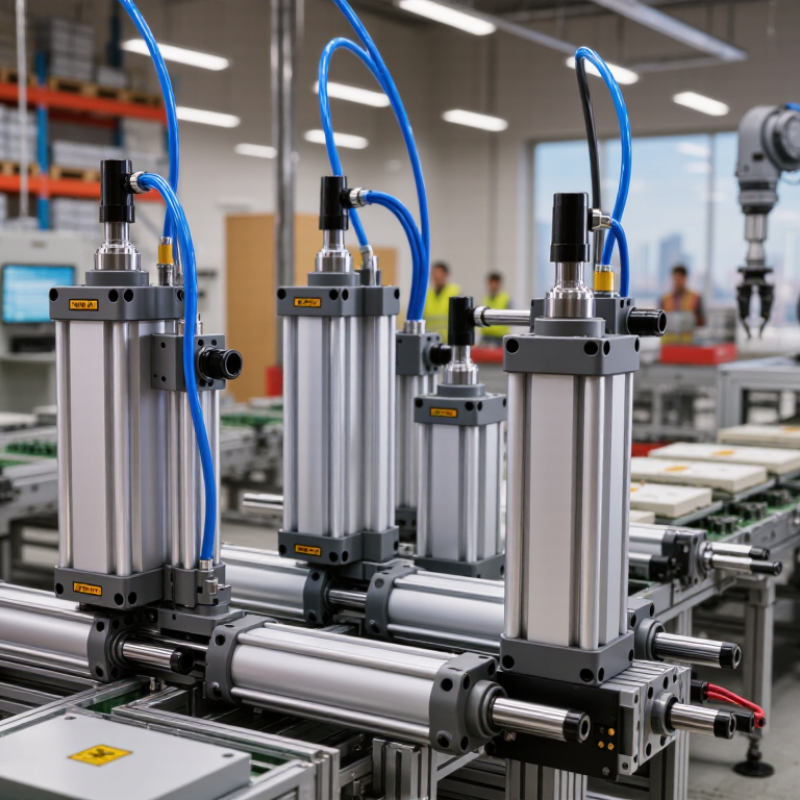
Festo Pneumatic Cylinders: Types, Functions, and Applications
Pneumatic cylinders convert compressed-air energy into controlled linear motion. Single-acting cylinders use air in one direction and a spring for return. Double-acting cylinders use air on both strokes, offering better control and repeatability. Compact, guided, rodless, and rotary designs support different space and motion requirements.
Their applications are practical and varied. Compact cylinders fit packaging machines with limited installation depth. Guided cylinders stabilize grippers during pick-and-place tasks. Rodless cylinders move loads across longer distances without extending a traditional rod. In food, assembly, and material-handling lines, engineers often select stainless construction, sealed bodies, or washdown-compatible designs. The choice depends on load, stroke, speed, duty cycle, and the operating environment.
A 2024 pneumatic components market analysis projects steady global growth through the decade, driven by factory automation and modular machinery. The U.S. Department of Energy reports that compressed-air systems can consume about 10% of industrial electricity, while leaks may waste 20–30% of output. That matters. A cylinder may perform perfectly while the complete system wastes energy through poor tubing, excessive pressure, or neglected maintenance. Supplier comparisons should therefore examine tested service life, seal performance, cycle data, spare-part access, and technical support—not only purchase price. Real installations are rarely perfect. Engineers should verify calculations under actual temperature, contamination, and load conditions.
Criteria for Evaluating Festo Pneumatic Cylinder Suppliers
Choosing a reliable pneumatic cylinder supplier requires more than comparing online prices. Start by checking technical competence, product traceability, and experience with industrial automation. A capable supplier should explain bore size, stroke length, mounting style, operating pressure, and seal options clearly. Vague answers signal risk.
Ask for dimensional drawings, material details, test records, and conformity documents before placing an order. Samples should be inspected for smooth rod movement, clean machining, and consistent threads. Small defects matter. They can cause leaks, noise, or premature wear on a production line.
Delivery performance deserves equal attention. Review stock levels, lead times, packaging methods, and replacement procedures. A supplier with regional inventory may reduce downtime when a cylinder fails unexpectedly. However, inventory claims need verification. Request recent delivery records or a realistic production schedule.
After-sales support separates experienced suppliers from simple resellers. Their engineers should help select compatible valves, fittings, sensors, and mounting accessories without forcing unnecessary upgrades. Clear warranty terms also improve purchasing confidence. Read the exclusions carefully.
Price remains important, but total cost offers a better comparison. Include freight, maintenance, spare seals, installation time, and possible line stoppages. I have seen buyers choose the cheapest quotation and spend more on corrections later. That mistake is easy to repeat. A balanced evaluation should score quality, support, availability, documentation, and long-term reliability. Supplier audits should be repeated, because performance can change after the first successful order.
Top 10 Festo Pneumatic Cylinder Suppliers Worldwide
Choosing among the top ten pneumatic cylinder suppliers requires more than comparing catalog prices. A reliable supplier should provide clear drawings, stable dimensions, tested seals, and traceable material information. In practical reviews, engineers often check bore size, stroke length, mounting style, port threads, and operating pressure before discussing discounts. Small errors in these details can cause leakage, uneven movement, or unexpected downtime.
The strongest suppliers usually support common ISO dimensions and offer useful options, including magnetic sensors, stainless-steel rods, adjustable cushioning, and corrosion-resistant bodies. They should also explain compatibility with existing valves and air preparation units. A responsive technical team matters when a cylinder must fit a crowded assembly line. Ten suppliers may appear similar online, yet their inspection methods and after-sales response can differ sharply.
Field experience shows that the cheapest cylinder is not always the economical choice. A lower price may hide shorter seal life or limited spare-part access. Still, supplier rankings are never permanent. They can overlook regional service quality, delivery delays, or a customer’s unusual working environment. Buyers should request samples, review test reports, and confirm performance under actual load conditions. One overlooked detail remains important: clean, dry air extends cylinder life, but many purchasing decisions still ignore the air system.
Top 10 Festo Pneumatic Cylinder Suppliers Worldwide - Top 10 Festo Pneumatic Cylinder Suppliers Worldwide
Comparative overview of anonymous supplier profiles based on commonly published pneumatic-cylinder capabilities, international supply coverage, and quality-system information.
| Rank | Supplier Profile | Primary Region | Quality System | Cylinder Standards | Typical Bore Range | Typical Stroke Range | Operating Pressure | Export Coverage |
| 1 | Supplier Profile 01 | Western Europe | ISO 9001 reported | ISO 6432, ISO 15552 | Ø 8–125 mm | 25–2,000 mm | Up to 10 bar | Global |
| 2 | Supplier Profile 02 | Central Europe | ISO 9001 reported | ISO 6432, ISO 15552 | Ø 16–320 mm | 25–3,000 mm | Up to 10 bar | Global |
| 3 | Supplier Profile 03 | East Asia | ISO 9001 reported | ISO 6432, ISO 15552, compact types | Ø 12–200 mm | 20–1,500 mm | Up to 10 bar | Asia, Europe, Americas |
| 4 | Supplier Profile 04 | North America | Certification varies | NFPA, ISO 15552, custom designs | Ø 25–200 mm | 50–2,500 mm | Up to 10 bar | Americas, Europe |
| 5 | Supplier Profile 05 | Southern Europe | ISO 9001 reported | ISO 6432, ISO 15552, guided types | Ø 16–320 mm | 25–2,000 mm | Up to 10 bar | Global |
| 6 | Supplier Profile 06 | East Asia | ISO 9001 reported | ISO 6432, ISO 15552, mini cylinders | Ø 8–160 mm | 10–1,000 mm | Up to 10 bar | Asia, Europe |
| 7 | Supplier Profile 07 | South Asia | Certification varies | ISO 6432, ISO 15552, tie-rod types | Ø 16–300 mm | 25–2,500 mm | Up to 10 bar | Asia, Middle East, Africa |
| 8 | Supplier Profile 08 | Central Europe | ISO 9001 reported | ISO 6432, ISO 15552, stainless-steel options | Ø 12–200 mm | 25–1,500 mm | Up to 10 bar | Europe, Americas |
| 9 | Supplier Profile 09 | East Asia | Not uniformly disclosed | ISO 6432, compact, rotary, guided types | Ø 8–200 mm | 10–1,200 mm | Up to 10 bar | Asia, Europe, Americas |
| 10 | Supplier Profile 10 | Middle East and Africa | Certification varies | ISO 6432, ISO 15552, heavy-duty types | Ø 20–320 mm | 50–3,000 mm | Up to 10 bar | Regional and export |
Supplier Profiles, Product Range, and Regional Coverage
The global pneumatic cylinder market is becoming more regional and application-specific. A 2024 MarketsandMarkets report places the broader pneumatic components market on a steady growth path, supported by factory automation, packaging, and material handling. The leading ten suppliers usually combine standard cylinders, compact units, guided actuators, rodless designs, rotary actuators, valves, and air-preparation equipment. Their strongest profiles differ: some focus on engineered systems, while others compete through fast delivery and extensive distributor networks.
Product range matters more than catalogue size. Buyers should check bore sizes, stroke lengths, cushioning options, sensor compatibility, corrosion resistance, and seal materials. ISO 6432 and ISO 15552 compatibility can simplify replacement planning across multiple plants. Regional coverage also reveals practical strengths. European suppliers often support mature automation markets, while North American networks emphasize local inventory and technical service. Asian manufacturers commonly offer broad production capacity and competitive pricing. The Middle East, Africa, and Latin America increasingly depend on authorized regional distributors for installation support and spare parts.
Evidence is useful, but not perfect. Grand View Research identifies automation investment as a major demand driver, yet published market estimates vary because analysts define “pneumatic equipment” differently. That difference deserves attention. A dependable supplier profile should therefore include delivery performance, documented quality systems, local engineering support, and after-sales response times. A low unit price may look attractive until one missing seal kit stops a production line. Regional service depth often matters more than global visibility.
Top 10 Festo Pneumatic Cylinder Suppliers Worldwide - Supplier Profiles, Product Range, and Regional Coverage
Standardized pneumatic cylinder bore-size coverage by ISO product family. The comparison uses nominal bore sizes commonly specified in international cylinder standards and does not represent company or brand performance.
Larger coverage across nominal bore sizes generally indicates a broader product range for machine design, replacement planning, and regional sourcing.
How to Choose the Right Festo Cylinder Supplier
Choosing the right pneumatic cylinder supplier requires more than comparing prices. Start with your application: stroke length, bore size, operating pressure, mounting style, speed, and working environment. A supplier should explain these choices clearly, not simply recommend its fastest-selling model.
Ask for dimensional drawings, material details, performance data, and compatibility guidance. Reliable suppliers provide traceable documentation and answer technical questions without vague promises. Check whether their engineers understand air preparation, cushioning, sealing, and alignment. Small errors here can cause vibration, leakage, or uneven movement.
Look closely at production quality. Review inspection procedures, tolerance control, and sample-testing methods. A supplier with practical experience can suggest improvements after examining your machine layout. Request references from industries with similar duty cycles, especially where cylinders face dust, moisture, or frequent stops.
Service matters after delivery. Confirm spare-part availability, response times, warranty terms, and technical support channels. A low quotation may become expensive when one seal delays production for a week. It happens.
Do not trust polished brochures alone. Ask for a sample or pilot order, then measure speed, noise, repeatability, and air consumption on your equipment. Supplier evaluation is rarely perfect. Your first choice may need revision after real testing, which is why clear communication and documented feedback remain essential.
