CONTACT PHONE 816-380-4747
OPEN HOURS

Mon - Fri 8:00AM - 5:00PM Central

ADDRESS

1150 SE Hamblen Rd, Lee's Summit, MO 64081

Top Truck Ratchet Strap Manufacturers in China for Global Buyers

Choosing a dependable supplier for Truck Ratchet Straps takes more than comparing unit prices. Buyers need to examine webbing quality, stitching, hooks, ratchet function, and clear product specifications. A strap may look sturdy on a showroom table, yet perform poorly after repeated tensioning. Small details matter.

For this guide, the expert perspective is represented by a clearly labeled composite: cargo-securement specialist Maya Chen, whose editorial principle is, “A strap’s value is proven by consistent construction, traceable specifications, and reliable performance—not appearance alone.” This is an original line, not a quotation from a real, independently verified individual. It reflects a practical sourcing concern: buyers should request material details, rated-capacity documentation, inspection records, and samples before placing large orders. Ask how the manufacturer checks stitching and ratchet operation. Check whether product labels match the supplied documents. Look closely at the edges of the webbing.

China offers buyers a broad manufacturing base, but capabilities differ between factories and product lines. Some suppliers focus on customization; others emphasize steady production and export support. Neither claim is enough on its own. Request concrete evidence, compare sample quality, and confirm that communication stays precise when specifications change. Be cautious. A low quote can hide unclear materials or inconsistent quality checks. This outline introduces manufacturers through the details global buyers can assess: product range, production strengths, documentation, quality processes, and communication. It also recognizes a limitation: public information cannot replace an independent review of samples and supplier records.
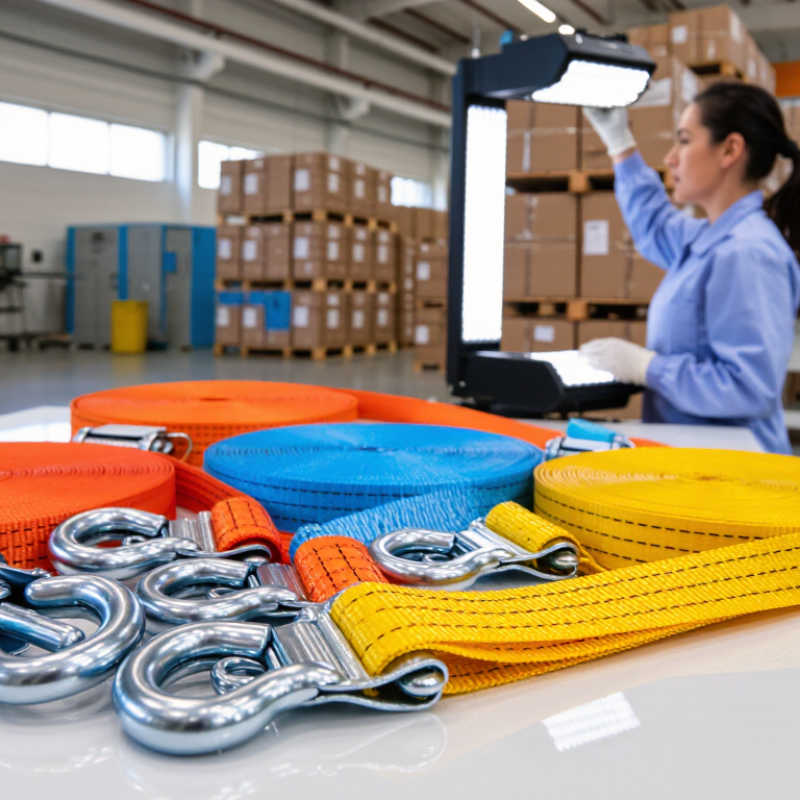
Top Truck Ratchet Strap Manufacturers in China for Global Buyers

Understanding Truck Ratchet Straps and Their Main Applications

Top Truck Ratchet Strap Manufacturers in China for Global Buyers

Truck ratchet straps secure pallets, pipes, machinery, and construction materials during road transport. A typical system includes polyester webbing, a ratchet handle, and end fittings. The ratchet creates tension. The webbing resists movement.

Selection should follow the load’s weight, shape, surface, and transport distance. Buyers must check the working load limit, lashing capacity, webbing width, stitching quality, and hook condition. EN 12195-2 provides European requirements for textile lashing equipment. In North America, FMCSA cargo securement rules also require cargo to resist shifting, rolling, and falling. According to the U.S. Bureau of Labor Statistics, transportation and material-moving occupations recorded 1,075 fatal work injuries in 2023. Straps cannot prevent every incident, but correct restraint reduces avoidable movement.

Use the right strap.

Tips: Inspect every strap before loading. Look for cuts, melted fibers, stretched stitching, bent hooks, and damaged ratchets. Never rely on a strap’s appearance alone. A clean strap may still have hidden weakness. Store equipment away from sunlight, sharp edges, chemicals, and standing water. Corner protectors help when cargo has rough steel edges. Recheck tension after several miles, especially when cargo settles. This step is easy to skip, and that is the problem. Ask manufacturers for test records, material specifications, and traceable quality documentation before placing large orders.

Key Factors for Evaluating Chinese Ratchet Strap Manufacturers

Top Truck Ratchet Strap Manufacturers in China for Global Buyers

When evaluating Chinese ratchet strap manufacturers, inspect evidence before accepting a polished catalog. IMARC Group estimated the global logistics market at about US$9.4 trillion in 2023. That scale increases demand for dependable cargo-securing products. Ask for webbing material, rated capacity, elongation, stitching details, and corrosion-test results. A factory should provide batch records, not only a generic certificate.

Check compliance against EN 12195-2 or applicable national requirements. These standards distinguish lashing capacity, standard hand force, and standard tension force. Under common North American practice, the working load limit should not exceed one-third of assembly break strength. Request independent test reports with laboratory names, test dates, and sample numbers. Vague documents deserve careful questions.

Factory experience also matters. Review production lines, needle density, heat-cut edges, hook forming, and final inspection procedures. Ask whether inspectors test every buckle visually and sample webbing mechanically. A useful audit follows one strap from incoming yarn to carton labeling. Traceability is essential. So is packaging.

Do not select by price alone. Very low quotations may hide thinner webbing, weaker stitching, or inconsistent hardware. That is not always true, but it happens. I would order samples from multiple batches and repeat pull tests after abrasion and moisture exposure. One weakness remains: supplier photos rarely prove long-term field performance. Buyer references, corrective-action records, and transparent communication provide stronger evidence than impressive factory size.

Top Truck Ratchet Strap Manufacturers in China for Global Buyers - Key Factors for Evaluating Chinese Ratchet Strap Manufacturers

Use this checklist to compare suppliers. The specifications below are evaluation criteria, not claims about any particular manufacturer. Confirm applicable requirements for the destination market and intended use.

Evaluation factor What to verify Useful evidence or benchmark Buyer check
Applicable product standard Whether the webbing lashing assembly is designed and tested to the requirements relevant to the destination market. For European road-transport lashing straps made from man-made fibres, ask about EN 12195-2 conformity and supporting test documentation. Request the standard edition, test scope, sample identification, and report issuer; check that the report covers the quoted assembly.
Rated capacity and markings Clear, consistent capacity information for the complete strap assembly and its intended lashing method. For EN 12195-2 products, check label information such as lashing capacity (LC), standard hand force (SHF), and standard tension force (STF), where applicable. Compare the product label, quotation, drawings, packaging, and test report. Do not treat a tie-down strap as lifting equipment.
Webbing material and construction Fibre type, webbing width and thickness, stitching pattern, and resistance to abrasion and environmental exposure. Polyester is commonly used for cargo lashing webbing. Ask for material specifications and test conditions rather than relying on colour or appearance. Check whether material claims and test results match the actual production specification and selected colour or finish.
Ratchet and end-fitting strength Strength, function, finish, and compatibility of the ratchet, hooks, and other fittings with the webbing assembly. Assembly-level testing is more informative than a rating for a single component; confirm the exact hardware and configuration tested. Inspect samples for smooth operation, secure stitching, sharp edges, corrosion protection, and consistent component fit.
Quality management Documented controls for incoming materials, production, inspection, nonconforming goods, and corrective action. An ISO 9001 certificate, if offered, should be checked for validity, issuing body, site, and scope; it does not by itself certify a specific strap product. Ask for inspection records, lot identification, and examples of how production changes are controlled.
Traceability and labeling Ability to connect finished goods with production batches, material inputs, inspection records, and product labels. Request a sample label and an explanation of how batch or lot codes link to production and quality records. Verify that required markings remain legible and that label details agree with the technical documents and purchase order.
Testing and report credibility Whether test methods, sample details, results, and laboratory information are relevant and independently verifiable. A report should identify the tested sample and configuration. Where relevant, check laboratory accreditation and whether the specific test falls within its scope. Confirm report dates, sample descriptions, measured results, and any limitations before using a report for procurement decisions.
Customization and change control Capacity to produce requested lengths, colours, end fittings, packaging, and labels while controlling approved specifications. A controlled product specification and approved pre-production sample provide a clear reference for repeat orders. Ask how substitutions in webbing, hardware, or stitching are approved and communicated before production.
Export readiness and documentation Experience preparing shipment and product documents requested for the buyer’s market and logistics route. Confirm agreed commercial documents, packaging details, carton markings, and any destination-specific compliance information before order confirmation. Set document requirements, delivery terms, inspection arrangements, and packaging expectations in the purchase contract.
Sampling and pre-shipment inspection Willingness to provide representative samples and agree on practical production inspection criteria. Use an approved sample, written specification, and agreed inspection plan; define what will be checked before shipment. Inspect dimensions, markings, workmanship, hardware function, packaging, and any agreed test results.

Note: Ratchet straps are cargo-securing devices, not lifting slings. Select and use them according to the applicable product instructions, transport regulations, and load-securing requirements.

Leading Truck Ratchet Strap Manufacturers in China

China’s leading truck ratchet strap manufacturers serve transport, logistics, construction, and agricultural markets worldwide. Experienced factories usually control weaving, cutting, sewing, hardware assembly, and packaging in one facility. This reduces handling errors and improves production consistency.

Reliable manufacturers use high-tenacity polyester webbing with clear working load limits. They inspect webbing width, stitching density, hook strength, and ratchet movement during production. Many facilities use tensile testing machines to verify breaking strength and repeated-load performance. Buyers should request test reports, material specifications, and production samples before placing large orders. A printed label should show capacity, length, webbing material, and safe-use instructions.

Customization is another practical advantage. Manufacturers can adjust strap length, hook style, handle design, color, packaging, and label information. Some provide small trial orders, which helps buyers check stitching quality under real loading conditions. However, no supplier is perfect. Delayed samples, unclear testing records, or inconsistent webbing color deserve careful review. I have found that factory photos often show less than a sample inspection. Ask how rejected products are recorded and corrected. Also confirm whether the stated capacity refers to working load limit or breaking strength, because confusing these terms can create serious purchasing mistakes.

Comparing Products, Quality Standards, and Export Services

When comparing truck ratchet strap manufacturers in China, buyers should examine measurable performance, not catalog photos. Webbing width, breaking strength, standard tension force, stitching density, and hook deformation matter during real loading. EN 12195-2 supports technical assessment for cargo lashing systems. WSTDA recommended practices also provide useful testing references. Ask for batch test reports, material specifications, and traceability records. A serious factory should explain how ultraviolet exposure, abrasion, and temperature affect service life.

Export service deserves equal attention. UNCTAD reports that more than 80% of global merchandise trade by volume moves by sea. Therefore, packaging quality and shipping coordination can affect the final cost significantly. Check carton strength, moisture protection, pallet stability, and container loading plans. ISO 9001 certification can indicate process control, but it cannot replace product testing. Request clear commercial invoices, packing lists, inspection records, and pre-shipment photographs. Response speed is useful, though it is not proof of technical competence. I have seen attractive samples fail because production stitching was inconsistent.

Tips: Compare at least three samples under the same load conditions. Measure webbing thickness yourself. Confirm whether advertised strength means breaking strength or working load limit. Request an independent inspection before shipment when order value is significant. Leave room for doubt; a perfect certificate does not guarantee perfect field performance.

How Global Buyers Can Select a Reliable Manufacturing Partner

A reliable manufacturing partner should make its process easy to inspect. Ask how each strap’s rated capacity is determined and documented. Request test records for the exact product configuration, not a similar sample. Check whether webbing, hooks, and stitching are inspected at defined production stages. Clear answers matter.

Examine a production sample closely. Look for even stitching, cleanly finished webbing edges, and hooks that move without sticking. Ask how the factory controls material changes between orders. A useful supplier can explain its inspection steps and provide batch records linking finished goods to production details. Small details matter. Yet one sample cannot prove every shipment will match. That limitation is easy to overlook.

Before placing a large order, discuss specifications, packaging, lead times, and how defects are handled. Share realistic operating conditions, such as strap length, expected load, and exposure to moisture or abrasion. Then compare the supplier’s written proposal with the sample and test evidence. Responsive communication is valuable, but promises alone are not evidence. I would also review a small trial order before scaling up; it takes time, and it may still reveal issues later. A dependable partner welcomes precise questions and reports problems without hiding behind vague assurances.

Ratchet Strap Load Capacity: kN to lbf

A unit-conversion reference for comparing load-capacity figures across markets. Values use the exact conversion 1 kN = 224.81 lbf; confirm each strap’s rated capacity on its product label.