CONTACT PHONE 816-380-4747
OPEN HOURS

Mon - Fri 8:00AM - 5:00PM Central

ADDRESS

1150 SE Hamblen Rd, Lee's Summit, MO 64081

Why Choose an Indoor Isolating Switch?

Why Choose an Indoor Isolating Switch?

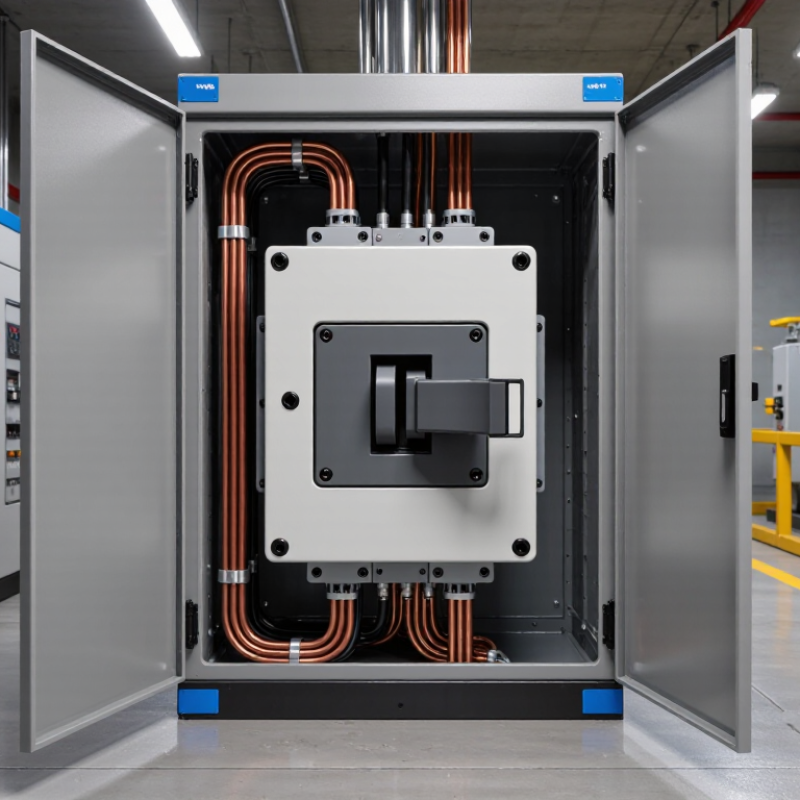
In medium-voltage facilities, safe isolation is not an abstract idea. It is a physical action performed beside energized equipment. An Indoor Isolating Switch creates a defined separation between the supply and the circuit under maintenance. Its visible position can help technicians confirm that the intended section is disconnected. That small detail matters in crowded switchrooms.

Power-system specialist Dr. J. C. Das expresses the principle clearly: “Isolation is not interruption; it is visible separation for safe work.” The distinction is important. A circuit breaker is designed to interrupt fault current. An isolating switch is designed to provide secure separation after the circuit is already de-energized. Confusing these functions can create dangerous assumptions.

Indoor installation also brings practical advantages. The switch is protected from rain, dust, ultraviolet exposure, and accidental outdoor contact. A compact metal-clad arrangement can reduce space requirements inside substations or factory control rooms. Mechanical interlocks can prevent incorrect operating sequences. Earthing provisions can support safer maintenance procedures when correctly applied.

The details deserve attention. They always do.

Choosing an Indoor Isolating Switch requires more than checking voltage and current ratings. Engineers should examine short-time withstand capacity, insulation level, operating mechanism, enclosure classification, clearance, and compatibility with the complete switchgear assembly. Maintenance access matters too. A technically suitable switch may still frustrate workers if its handle is poorly positioned.

No switch removes every risk. Installation quality, inspection, isolation procedures, and trained personnel remain essential. This is where product claims need careful review. Real reliability comes from coordinated design, verified testing, and disciplined operation—not from the switch alone.
Why Choose an Indoor Isolating Switch?

What Is an Indoor Isolating Switch?

An indoor isolating switch is a mechanical device that separates an electrical circuit from its power source. It creates a safe isolation gap for inspection or maintenance. Unlike a circuit breaker, it is generally not designed to interrupt load current. The circuit should be de-energized first. IEC 62271-102 describes disconnectors as devices for isolation and safe clearance in high-voltage installations. Many indoor units sit inside metal-enclosed switchgear, where dust, moisture, and accidental contact are better controlled.

Why choose an indoor isolating switch? Its compact structure suits substations, factories, and commercial electrical rooms. A clear position indicator helps operators confirm whether the circuit is connected or isolated. Interlocking can also reduce incorrect switching. The IEA Electricity 2024 report expects global electricity demand to grow by more than 3% annually through 2026. More electrical equipment means more maintenance points. A reliable isolation device matters. Still, it is not a magic shield. Poor labeling, worn mechanisms, or rushed procedures can defeat good design. That practical weakness deserves attention.

Tips: Check rated voltage, current, insulation level, and installation clearance. Verify the position indicator during scheduled maintenance. Keep the operating handle dry and accessible. Do not use the isolating switch as a substitute for a circuit breaker. In real facilities, records are often incomplete, so independent inspection can reveal overlooked wear.

How Does an Indoor Isolating Switch Work?

An indoor isolating switch creates a controlled break in an electrical circuit. Its main purpose is safety, not routine load interruption. When opened, the contacts separate and provide a visible or verified isolation gap. Technicians can then lock the handle and attach warning labels before maintenance begins. The device should operate only after the circuit breaker has removed the load. Otherwise, dangerous arcing may occur.

Its working sequence is simple but disciplined. A mechanical handle moves fixed and moving contacts apart inside an enclosed switch body. Interlocking can prevent access while the circuit remains energized. IEC 60947-3 covers low-voltage switch-disconnectors, while IEC 62271-102 addresses high-voltage disconnectors and earthing switches. These standards focus on insulation, mechanical endurance, clearances, and safe operation. The IEA Electricity 2025 report forecasts global electricity demand will grow by more than 3% annually through 2027. More demand means more switching points and more maintenance decisions.

Indoor installation reduces exposure to rain, salt spray, and windborne debris. It does not remove every risk. Dust, condensation, heat, and poor ventilation can still weaken insulation. A clean enclosure may look reliable while hidden moisture causes trouble. That assumption deserves checking. In field practice, operators should verify the circuit is de-energized, test for absence of voltage, and confirm the isolator position locally. The process feels slower than simply turning a handle. It is safer because the physical separation becomes part of the evidence.

Key Features of Indoor Isolating Switches

Why Choose an Indoor Isolating Switch?

Indoor isolating switches provide a clear, controlled way to separate electrical equipment during maintenance. Their main value lies in safe, visible disconnection rather than automatic fault protection. When the handle is moved, operators can confirm the circuit position through a visible contact gap or clear status indicator. This practical detail reduces uncertainty in busy switch rooms.

Key Features of Indoor Isolating Switches

A robust enclosure protects internal contacts from dust, accidental contact, and routine indoor moisture. Insulated barriers help limit exposure to energized parts. Many designs include mechanical interlocking, preventing unsafe operation while connected equipment remains active. Lockable handles also support controlled maintenance procedures. Short-circuit ratings, operating voltage, continuous current, and mechanical endurance must match the installation. These figures are not decoration.

Manual operation should feel firm and predictable. Excessive resistance may suggest misalignment, wear, or installation stress. A compact structure helps in crowded panels, although limited space can make cable termination harder. Good switches provide clear terminals, dependable insulation, and sufficient clearance for heat dissipation. Testing should include contact resistance, insulation condition, and correct operation after installation.

No switch is perfect. Humidity, dust, repeated force, and poor tightening can reduce reliability over time. I have seen small installation details create larger maintenance problems. For that reason, qualified technicians should follow applicable electrical standards and the manufacturer’s technical data. A simple inspection record can reveal gradual changes before they become a serious concern.

Why Choose an Indoor Isolating Switch?

Indoor isolating switches provide a clearly defined isolation point for medium-voltage equipment. They are selected according to the system’s nominal voltage, installation environment, required clearances, and interlocking arrangement.

The chart shows common IEC medium-voltage nominal voltage classes used when specifying indoor switchgear. Actual isolating-switch ratings, insulation levels, short-time withstand current, and enclosure requirements must be confirmed from the equipment datasheet and project standards.

  • Visible or mechanically indicated isolation helps confirm a safe disconnected position.
  • Mechanical and electrical interlocking can help prevent incorrect operating sequences.
  • Indoor installation reduces exposure to rain, dust, and direct ultraviolet radiation.
  • A separate earthing switch may be provided for safe maintenance procedures.

Why Choose an Indoor Isolating Switch?

Why Choose an Indoor Isolating Switch?

Why choose an indoor isolating switch? It creates a controlled separation point for maintenance and fault response. Operators can open the circuit, verify isolation, and apply safety procedures in a defined area. The enclosure also limits exposure to rain, salt, dust, and accidental contact. Cleaner surroundings help contacts remain more stable. Small rooms matter.

The U.S. Bureau of Labor Statistics recorded 145 fatal occupational injuries involving exposure to electricity in 2022. This figure covers many industries, not isolating switches alone. However, it shows why dependable isolation deserves serious attention. IEC 62271-200 evaluates metal-enclosed switchgear for service conditions, accessibility, and internal arc performance. A suitable indoor unit should match those requirements.

Experienced maintenance teams still inspect terminals, interlocks, heaters, and signs of condensation. NFPA 70B emphasizes documented electrical maintenance and condition-based attention. Indoor installation is not maintenance-free. Humid basements can damage insulation, while poor ventilation can raise temperature. I would not treat the enclosure as a guarantee. Check the rated voltage, current, short-circuit capability, ingress protection, and installation clearance before selection. A clear viewing window can help, but it cannot replace approved test procedures. One missed inspection can undo the advantage.

Why Choose an Indoor Isolating Switch? - Why Choose an Indoor Isolating Switch?

Typical characteristics and selection considerations for low-voltage indoor isolating switches
Data Dimension Typical Information Why It Matters
Primary Function Provides a visible or clearly indicated means of electrically isolating a circuit from its supply. Supports safe inspection, maintenance, testing, and repair by separating equipment from energized conductors.
Installation Environment Designed mainly for clean, dry indoor locations such as electrical rooms, control panels, workshops, and plant areas. Indoor installation avoids unnecessary exposure to rain, ultraviolet radiation, snow, and outdoor pollutants.
Common Rated Voltage Range Many low-voltage models are rated for systems up to 1,000 V AC or 1,500 V DC, depending on the product design and applicable standard. The switch rating must be equal to or higher than the system voltage for safe isolation.
Common Rated Current Range Typical low-voltage applications range from approximately 16 A to 630 A, with higher ratings available for specialized installations. Correct current selection helps prevent overheating and ensures the switch can carry the normal circuit load.
Applicable Product Standard Low-voltage switch-disconnectors are commonly specified and tested in accordance with IEC 60947-3 or the relevant local equivalent. Standards define requirements for switching performance, insulation, temperature rise, and isolation capability.
Ingress Protection Indoor enclosures commonly use IP20, IP30, IP40, or IP65 depending on the enclosure and installation conditions. A suitable IP rating helps protect users and internal parts against contact, dust, or water ingress where required.
Operating Temperature Many standard devices are designed for an ambient range close to −25°C to +55°C, subject to the manufacturer’s derating requirements. Temperature affects current-carrying capacity, insulation performance, and service life.
Isolation Indication Common designs provide a clearly marked handle position, often using ON, OFF, or isolated-position indications. Clear status indication reduces the risk of operating or servicing the wrong circuit.
Number of Poles Available configurations commonly include 1-pole, 2-pole, 3-pole, and 4-pole arrangements. The pole configuration should match the circuit design, including whether the neutral conductor must also be isolated.
Short-Circuit Coordination The isolating switch may require upstream overcurrent protection and coordination with the prospective short-circuit current. An isolator is not automatically a substitute for a circuit-breaker or fuse unless its specified switching function includes the required protection.
Maintenance Requirements Indoor units generally require periodic inspection of terminals, enclosure condition, mechanical operation, and signs of overheating. Controlled indoor conditions can simplify inspection and help reduce maintenance effort.
Space and Installation Compact panel-mounted, DIN-rail, or enclosure-mounted designs are widely used in indoor distribution systems. Flexible mounting options help optimize panel layout and provide convenient access for authorized personnel.
Typical Applications Distribution boards, HVAC equipment, motor control panels, machinery, lighting circuits, battery systems, and maintenance isolation points. Dedicated isolation improves operational control and supports safer work procedures across multiple types of equipment.
Key Selection Checks Verify voltage, current, frequency, pole count, utilization category, short-circuit withstand capability, IP rating, mounting method, and local code requirements. Correct selection ensures the device is suitable for the electrical system, environment, and intended switching duty.

Note: Ratings and operating ranges are typical values for low-voltage indoor applications. Always verify the specific device markings, technical documentation, installation conditions, and applicable electrical regulations before selection or installation.

How to Select the Right Indoor Isolating Switch

Choosing an indoor isolating switch requires more than matching a voltage label. The switch must suit the circuit’s rated voltage, continuous current, and number of poles. Check the equipment’s short-circuit withstand rating too. A switch used in a small control panel may need different protection from one serving a motor feeder. Indoor installation does not mean every environment is clean or dry. Dust, condensation, heat, and limited ventilation still affect service life.

Tips: Confirm whether the switch is rated for isolation only or for load switching. Never assume it can interrupt a live, heavily loaded circuit. Check the enclosure’s IP rating, terminal capacity, operating handle position, and available panel space. A visible isolation position can make maintenance safer. Interlocking may also prevent accidental energizing during inspection.

In practical panel work, I recheck cable size and terminal temperature before approving a selection. That step is easy to overlook. Select a switch that follows IEC 60947-3 or the applicable local standard, and verify the installation rules with a qualified electrical professional. Compare the switch’s mechanical endurance with the expected operating frequency. For emergency access, consider handle visibility and clear labeling. I have seen technically suitable switches become poor choices because their terminals were too crowded. Sometimes the smallest detail causes the delay.