CONTACT PHONE 816-380-4747
OPEN HOURS

Mon - Fri 8:00AM - 5:00PM Central

ADDRESS

1150 SE Hamblen Rd, Lee's Summit, MO 64081

Why Is a Pressure Relief Valve Important?

A Pressure Relief Valve is a small component with a critical responsibility. It protects vessels, pipelines, boilers, and process equipment from dangerous pressure increases. When pressure exceeds a preset limit, the valve opens and releases fluid or gas through a controlled path. This response can prevent equipment deformation, leakage, rupture, and costly production interruptions.

In practical maintenance work, the valve may appear inactive for months. Then a blocked outlet, failed control system, or sudden temperature change can make it essential within seconds. Its spring, seat, inlet connection, and discharge pipe must match the system design. A technician should verify the set pressure, inspect corrosion, and confirm that the discharge route remains clear. Records also matter. They show whether testing followed the manufacturer’s instructions and applicable engineering standards.

A relief valve is not a complete safety strategy. It cannot correct poor design, neglected inspection, or an incorrectly selected valve. That limitation is easy to underestimate. Even a certified component may fail to protect equipment if installation changes system pressure behavior. Professional engineers should evaluate operating conditions, fluid characteristics, back pressure, and maintenance access before approval. Qualified personnel should perform testing and repairs.

Small detail, major consequence.

The most reliable approach combines suitable equipment, documented inspections, and trained judgment. Pressure Relief Valve performance depends on the entire protection system, not the valve alone. Regular review also helps identify assumptions that once seemed reasonable but no longer match real operating conditions. That honest reflection can prevent preventable failures and support safer, more dependable industrial operations.
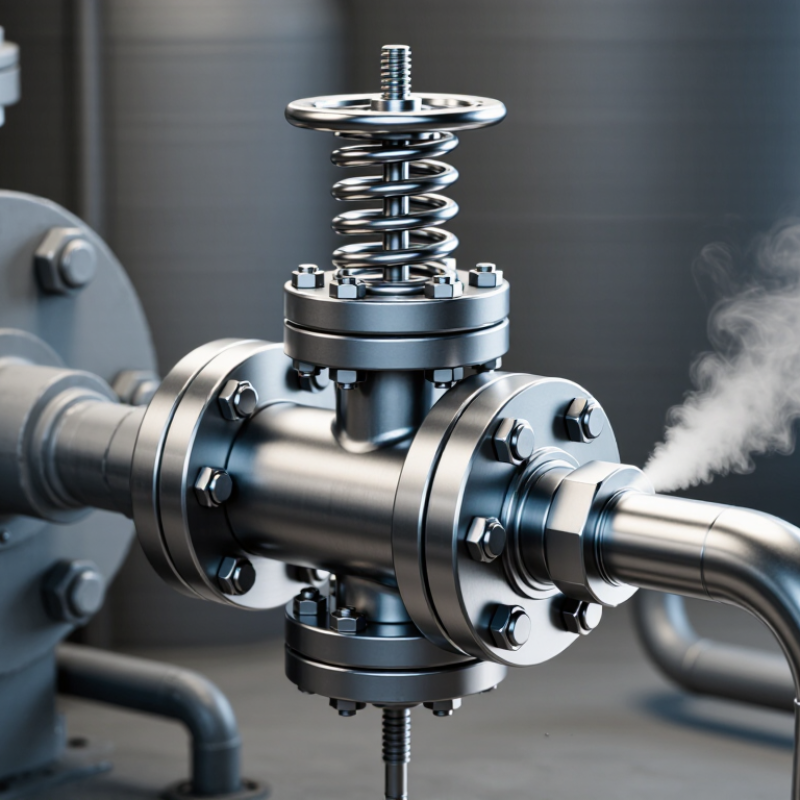
Why Is a Pressure Relief Valve Important?

Why Pressure Relief Valves Protect Equipment from Dangerous Overpressure

A pressure relief valve is the final mechanical barrier against dangerous overpressure. When a vessel heats, a discharge line blocks, or a control system fails, pressure can rise within seconds. API 521 identifies fire exposure, thermal expansion, utility failure, and chemical reaction as common relief scenarios. The valve opens at a defined set pressure, releasing fluid before the equipment reaches its allowable limit.

The risk is not theoretical. The UK Health and Safety Executive recorded 138 workplace fatalities and about 600,000 non-fatal injuries in 2023/24. Its statistics do not isolate relief-valve failures, but they show why small process weaknesses deserve attention. During field inspections, engineers often find corroded springs, painted discharge outlets, incorrect set points, or missing inspection records. These details matter. A relief valve may be correctly sized on paper yet unreliable in service.

API 520 recommends evaluating capacity, inlet pressure loss, backpressure, and discharge routing during valve selection. A poorly routed outlet can create dangerous reaction forces or expose workers to hot vapor. Maintenance teams should verify lift settings, inspect seals, and confirm that isolation valves cannot be closed accidentally. The National Board of Boiler and Pressure Vessel Inspectors also emphasizes documented inspection and testing for pressure equipment. Still, design calculations are not enough. Real plants change, and assumptions age. That is where many protection gaps begin.

How ASME Section VIII Applies the 10% Accumulation Limit

Why Is a Pressure Relief Valve Important?

A pressure relief valve protects a vessel when pressure rises beyond its safe operating range. In a working plant, this may happen after a blocked outlet, control failure, or unexpected heating. The valve opens and releases enough fluid to limit further pressure increase. A small valve movement can prevent severe vessel damage.

ASME Section VIII commonly uses a 10% accumulation limit for many pressure vessel applications. Accumulation means the pressure increase above the vessel’s maximum allowable working pressure while the relief valve is discharging. For example, a vessel rated for 150 psi may reach 165 psi during a permitted relieving event. The valve’s set pressure is normally not higher than the MAWP, but the exact requirements depend on vessel design and service conditions.

This distinction matters during sizing and inspection. Engineers must calculate the required relieving capacity, confirm the set pressure, and consider back pressure, temperature, and fluid properties. A valve that opens at the correct pressure may still be undersized. That is easy to miss.

The 10% value is not a universal permission for every scenario. Fire exposure, multiple valves, and special services can involve different accumulation limits. The applicable ASME edition and jurisdiction should be checked before approval. Field records should also match the installed valve, spring range, and test results. Small documentation gaps can become large safety questions.

How API 520 Calculates Required Relief Capacity in kg/h or Nm³/h

A pressure relief valve protects equipment when pressure rises beyond a safe operating limit. Its required capacity must match the credible release scenario, not simply the pipe size. API 520 Part I and API 521 provide the calculation framework used for this work.

For liquid service, engineers usually calculate mass flow in kg/h. They consider heat input, liquid properties, relieving pressure, viscosity, and backpressure. For gas or vapor service, the result may be expressed in kg/h or Nm³/h. API 520 uses relieving pressure, temperature, molecular weight, compressibility factor, and specific-heat ratio. A typical gas calculation also includes discharge coefficient, backpressure correction, and installation factors. Small input changes can alter the final valve area.

Consider a vessel exposed to an external fire. The engineer estimates heat absorption, then converts that energy into vapor generation. The vapor rate may be 2,400 kg/h.

If the gas density at normal conditions is 1.20 kg/Nm³, the equivalent flow is about 2,000 Nm³/h. The two values describe the same release differently. They are not interchangeable without density data.

API 520 commonly examines a 10% overpressure case, but the permitted value depends on the equipment and scenario. ASME Section VIII and API 521 remain important references for design verification. I would not trust a calculation using “standard” density without checking temperature and composition. That shortcut is easy, and sometimes wrong. Real installations also need inlet-loss and built-up backpressure checks.

Which Pressure, Temperature, and Flow Conditions Trigger Valve Lift

Why Is a Pressure Relief Valve Important?

A pressure relief valve protects equipment when pressure rises beyond a safe limit. Valve lift usually begins when inlet pressure reaches its set pressure. The actual trigger may differ slightly because of temperature, backpressure, and permitted accumulation. A hot vessel can also lift unexpectedly. Trapped liquid expands as temperature increases, even without added flow. This condition is common in blocked-in piping and small thermal relief applications.

Flow conditions matter because pressure often rises when flow exceeds system capacity. A restricted outlet, closed downstream valve, fouled strainer, or undersized pipe can create this pressure increase. Flow itself does not directly open the valve. The resulting pressure does. Higher backpressure may reduce lifting performance, especially in conventional spring-loaded designs. Engineers should verify set pressure, relieving temperature, required flow rate, discharge capacity, and allowable accumulation against applicable codes. Field checks often find incorrect set points or poor discharge routing. The simple explanation is incomplete.

Tips: Confirm the set pressure at the protected equipment, not only at the valve. Check temperature changes during startup, shutdown, and blocked-flow events. Inspect the inlet for restrictions and measure built-up backpressure. Keep discharge piping supported and safely routed. Never assume a valve is suitable because its connection size matches. Testing records should show calibration results, inspection dates, and any adjustment. I would also review unusual operating data, because one overlooked pressure spike can reveal a design weakness.

How Valve Types Match Steam, Gas, Liquid, and Two-Phase Services

Why Is a Pressure Relief Valve Important?

How Valve Types Match Steam, Gas, Liquid, and Two-Phase Services

A pressure relief valve protects equipment when pressure exceeds its design limit. The correct valve depends on the fluid, temperature, phase behavior, and discharge conditions. For clean steam, a spring-loaded safety valve often provides fast, direct lifting. Steam can carry heat rapidly, so an undersized or poorly set valve may respond too late. ASME Boiler and Pressure Vessel Code Section VIII and API 520 provide the main sizing and installation framework.

Gas service needs stable capacity during rapid pressure release. Pilot-operated valves can suit large systems, but they require clean pilot lines and careful maintenance. Liquid service is different. A relief valve must manage incompressible flow, thermal expansion, and possible flashing. API 521 identifies blocked outlets, fire exposure, and thermal expansion as key overpressure scenarios. Two-phase flow is less predictable. Vapor and liquid may arrive together, reducing capacity and creating vibration. The design should use validated two-phase sizing methods, not simple gas assumptions.

The U.S. Energy Information Administration reported that natural gas supplied about 40% of U.S. utility-scale electricity generation in 2023. That scale increases the importance of dependable gas and steam protection. Field inspections still reveal a practical weakness: valves may be correctly selected but poorly maintained. A sticky spindle, wrong set pressure, or blocked discharge line can defeat the calculation.

Perfect on paper, perhaps. Engineers should verify real operating conditions, relief scenarios, and inspection records before accepting the final selection.