How to Choose Polymer Cement Concrete in 2026?
Choosing polymer cement concrete in 2026 requires more than comparing compressive strength or purchase price. Project conditions matter. A parking deck, factory floor, bridge repair, and coastal façade face very different risks. Moisture, chloride exposure, thermal movement, abrasion, and application temperature can change the result.
Dr. V. M. Malhotra, a respected concrete durability expert, offers a useful principle: “Durability must be designed, tested, and verified—not assumed.” This advice remains important when evaluating polymer cement concrete. A product may look excellent in a laboratory report, yet perform poorly over a dusty substrate or under rushed installation. Field experience reveals those gaps. Surface preparation, mixing accuracy, curing, and worker training deserve equal attention.
This guide explains how to compare polymer type, cement compatibility, bond strength, permeability, shrinkage, and service-life expectations. It also considers repair depth, traffic loading, chemical contact, climate, and maintenance access. Independent test data should support supplier claims. Ask for batch records, technical datasheets, application limits, and documented project references.
The cheapest option may create expensive repairs later. Still, higher price does not guarantee better performance. That assumption needs challenging. Some buyers focus heavily on sustainability claims, while overlooking transport distance, repair frequency, and actual lifespan. A practical choice balances performance, installation risk, environmental conditions, and long-term value. Small details matter. In 2026, the strongest selection process will combine laboratory evidence with site realities, transparent documentation, and careful professional judgment.

Classify Polymer Cement Concrete by Its 5–20% Polymer–Cement Ratio
How to Choose Polymer Cement Concrete in 2026?
Classify Polymer Cement Concrete by Its 5–20% Polymer–Cement Ratio
In 2026, polymer–cement ratio remains a practical screening tool. It measures polymer solids against cement mass, not total liquid admixture. At 5–8%, the mix usually improves adhesion and surface durability. It suits patching, overlays, and lightly exposed repairs. Workability still depends on water content and aggregate grading.
At 8–12%, the matrix becomes more cohesive and less absorbent. This range often fits bridge-deck repairs, industrial floors, and damp service areas. ACI 548.3R highlights polymer-modified concrete’s need for controlled curing and compatibility testing. More polymer does not automatically mean better concrete. That assumption causes expensive mistakes.
From 12–20%, crack-bridging and chemical resistance may improve, but cost and shrinkage risks increase. FHWA repair guidance emphasizes permeability, bond strength, and field curing as critical performance checks. A 2023 Global Cement and Concrete Association report also identifies durability as a major lifecycle priority. Test results should include ASTM C642 absorption, ASTM C1583 bond strength, and freeze-thaw exposure where relevant.
Inspectors should record substrate moisture, surface temperature, and mixing time. A cool slab can delay film formation. I have seen a high-ratio repair fail because the surface remained dusty. The ratio was correct. The preparation was not. Select the lowest tested ratio that meets the exposure, bond, and service-life requirements. A 20% formulation may be excessive for a dry indoor floor.
How to Choose Polymer Cement Concrete in 2026?
Classify Polymer Cement Concrete by Its 5–20% Polymer–Cement Ratio
The polymer–cement ratio is calculated as the mass of polymer solids divided by the mass of cement, expressed as a percentage. This practical classification divides the 5–20% range into three selection bands: lower ratios for economical cementitious repair mixes, medium ratios for improved adhesion and reduced permeability, and higher ratios for applications requiring greater flexibility and crack-bridging performance. Actual mix design should be validated through project-specific testing because aggregate type, polymer chemistry, curing conditions, and water-to-cement ratio also affect performance.
Set Strength Targets Using ASTM C579 Compressive and Flexural Tests
How to Choose Polymer Cement Concrete in 2026?
Choosing polymer cement concrete should begin with measured strength targets, not attractive product claims.
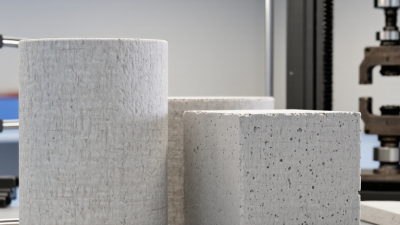
ASTM C579 provides procedures for evaluating compressive and flexural strength in chemical-resistant mortars, grouts, and related materials. Confirm that the selected C579 method matches your polymer concrete formulation. That decision matters.
Set compressive targets from actual service loads, safety factors, and curing conditions. A laboratory result may not represent a cold, damp repair area. Record specimen age, temperature, moisture, and mixing time. Small changes can affect the final value. Test several batches, not one perfect sample. Do not guess.
Flexural testing adds another useful view.
It shows how the material responds when bending creates tension across a section. This matters for thin toppings, equipment bases, slabs, and repaired edges. However, flexural strength does not directly equal crack resistance in every field condition. Consider joint movement, substrate bonding, impact, and thermal cycling separately.
A reliable specification should state minimum compressive and flexural values, test ages, specimen preparation, and acceptance limits. ASTM C579 results support comparison, but they cannot replace field judgment. In practice, I would also inspect trial panels after curing and loading. That step may reveal shrinkage or weak edges that laboratory cubes miss. The process is not flawless. Yet, transparent testing makes the remaining uncertainty easier to manage.
Compare Water–Cement Ratio, Absorption, Freeze–Thaw, and Chloride Resistance
How to Choose Polymer Cement Concrete in 2026?
Polymer cement concrete should match the exposure, not just the strength rating. Start by checking the water–cement ratio, because lower ratios usually reduce pores and improve durability. However, an extremely low ratio can hinder placement and create weak zones around reinforcement. On recent repair work, careful vibration mattered as much as the mixture design. That lesson is easy to overlook.
Absorption reveals how readily water enters the concrete. Request tested absorption values, not general claims. Low absorption can support freeze–thaw performance, especially when drainage is poor. Still, absorption alone cannot predict damage. Ask for freeze–thaw cycling data from an accredited laboratory and compare the test method with your project conditions. Chloride resistance also deserves attention near roads, bridges, and marine air. Review rapid chloride migration or diffusion results, while remembering that laboratory exposure rarely matches every field season.
Tips: Compare similar test ages and curing conditions. Inspect trial panels after wetting, drying, and cold cycles. Keep the water–cement ratio controlled during placement. Document temperature, mixing time, and surface preparation. These details often explain failures better than a polished datasheet. I would also challenge unusually perfect results; they may reflect ideal curing rather than normal construction. Small differences in absorption can become serious after years of repeated chloride exposure. Choose the mixture with evidence, workable handling, and a realistic maintenance plan.
Select Acrylic, SBR, Latex, or Epoxy for the Exposure Conditions
How to Choose Polymer Cement Concrete in 2026?
Exposure conditions should lead the selection, not product habit. AMPP’s IMPACT study estimated global corrosion costs at about $2.5 trillion annually, or 3.4% of global GDP. Moisture, chlorides, chemicals, temperature cycling, and ultraviolet light often act together. A site walk should record surface dampness, crack movement, drainage, and substrate temperature. Small details matter.
Acrylic-modified concrete suits fast repairs and strong sunlight. It usually cures quickly and offers useful ultraviolet resistance, but rushed placement can reduce bonding. SBR systems provide flexible adhesion and good resistance to water and freeze-thaw cycling. They fit parking decks, ramps, and damp repair zones. Latex-modified mixes improve workability and early handling, although excessive water can weaken the finished layer. This is where crews sometimes make mistakes.
Epoxy-modified concrete offers high bond strength and chemical resistance. It works well around industrial floors, loading areas, and chloride exposure. However, epoxy can struggle on wet substrates, during cold installation, or where movement is significant. ASTM C881 and ASTM C882 testing can help verify resin type and bond performance. The ASCE 2021 Infrastructure Report Card noted that 42% of U.S. bridges were at least 50 years old, increasing the need for durable repair decisions. Still, laboratory results are not field truth. I would test a small mock-up first, measure pull-off strength, and inspect it after temperature cycling. A perfect specification can fail through poor surface preparation.
How to Choose Polymer Cement Concrete in 2026? — Select Acrylic, SBR, Latex, or Epoxy for the Exposure Conditions
| System type |
Typical strengths |
Exposure suitability |
Key limitations |
Good fit when… |
| Acrylic-modified cementitious mortar |
Generally offers good adhesion and weatherability. Acrylic polymers are commonly selected for exterior cementitious repairs and overlays. |
Often suitable for exterior exposure and wet–dry cycling. Freeze–thaw performance depends on the complete mix, air content, curing, and exposure details. |
Not automatically suitable for continuous immersion or aggressive chemical exposure. Confirm compatibility and service limits for the specific formulation. |
An exterior repair or overlay needs a cement-based system with good bond and weather resistance. |
| SBR-modified cementitious mortar |
Styrene-butadiene rubber (SBR) latex can improve adhesion, tensile or flexural properties, and resistance to water penetration when properly proportioned and cured. |
Commonly used for bonded repairs and overlays exposed to damp conditions or repeated wetting. Suitability for immersion and freeze–thaw cycling is formulation-specific. |
Excess polymer or incorrect mixing can affect strength, setting, and moisture-vapor movement. Follow the specified mixing ratio and curing instructions. |
Bond to sound concrete and improved water resistance are priorities for a cementitious repair. |
| Other polymer-latex-modified cementitious mortar |
“Latex” describes a water-based polymer dispersion, not one single chemistry. Properties depend on whether the latex is SBR, acrylic, or another polymer and on the complete formulation. |
Cannot be reliably rated by the word “latex” alone. Check test data for the actual product and the intended exposure, including immersion, chemicals, and freeze–thaw conditions. |
The term is too broad for a dependable performance comparison without identifying the polymer type and product specifications. |
The specified latex chemistry, application limits, and relevant test results are clearly documented. |
| Epoxy-modified cementitious mortar |
Can provide strong bond and improved resistance to particular chemicals or liquids, depending on the epoxy system and exposure. Cementitious epoxy-modified mortars differ from resin-only epoxy mortars and coatings. |
Consider for demanding industrial repairs or specified chemical exposure only when the system’s chemical-resistance data covers the actual substance, concentration, temperature, and contact time. |
Usually requires careful substrate preparation and strict mixing and placement controls. Vapor transmission, UV appearance, and chemical resistance vary by system; verify before use. |
A project requires higher bond or targeted chemical resistance and the selected system has documented performance for the service conditions. |
Selection note: These are general tendencies, not guaranteed ratings. Compare the full system’s technical data and test results, and assess substrate condition, thickness, curing, moisture-vapor needs, and the actual exposure. “Epoxy-modified cementitious mortar” should not be assumed to have the same properties as a resin-only epoxy coating or mortar.